

Amid growing international efforts to address the Gaza crisis, Pakistan finds itself at a diplomatic crossroads regarding a United States-led proposal for an international stabilisation force. The plan, part of a broader 20-point strategy presented by US President Donald Trump, envisions a transition period in the war-torn Palestinian territory overseen by troops from Muslim-majority nations. However, Islamabad has clarified that it has not yet committed to contributing soldiers to this multinational initiative.
Washington's Confidence and Islamabad's Caution
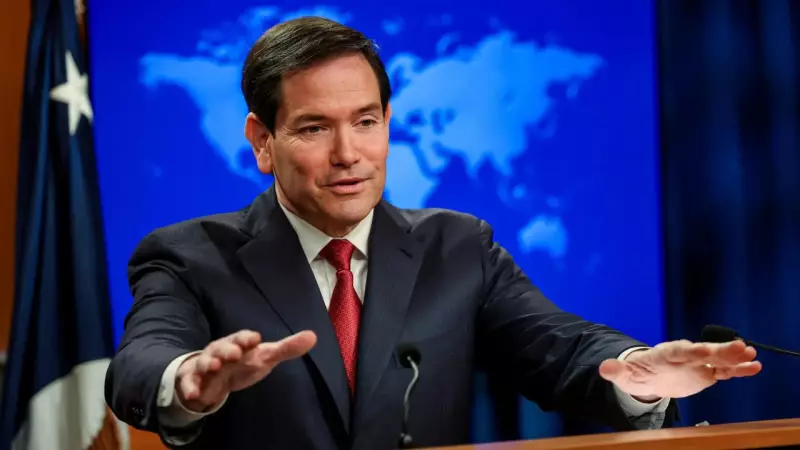
While pressure from Washington intensifies, US Secretary of State Marco Rubio expressed optimism on Friday about the formation of the force. He stated he was confident that a number of nation-states acceptable to all parties in the conflict would step forward. When specifically questioned about Pakistan's potential involvement, Rubio acknowledged, "We're very grateful to Pakistan for their offer to be a part of it, or at least their offer to consider being a part of it." He added that the US needed to provide more details before seeking a firm commitment from any country.
This statement from Washington stands in contrast to the official position from Pakistan's capital. A day earlier, on Thursday, the country's Foreign Office spokesperson, Tahir Hussain Andrabi, explicitly stated that the decision was still pending. "About Pakistan’s participation in the ISF (International Stabilisation Force), we have not taken a decision to participate in ISF as yet," Andrabi declared during the weekly media briefing in Islamabad.

Contradicting Reports on High-Level Talks
The diplomatic narrative took a further twist following a Reuters news agency report. The report claimed that Pakistan's Chief of Army Staff, General Asim Munir, was expected to travel to Washington for talks with President Trump, with the Gaza force being a top priority topic. This report was swiftly and firmly contradicted by the Pakistani Foreign Office.
Spokesperson Andrabi, as reported by Dawn newspaper, directly challenged the essence of the Reuters story. "I can contradict the Reuters story in its essence that it seemed to suggest that the visit has been planned and there is a finality about it. So, I am contradicting that," he asserted. He emphasised that any such official visit would be announced by the government beforehand, which had not happened in this case.
This denial found support from the White House as well. A White House official, responding to a query from Arab News, stated that no meeting between General Munir and President Trump is currently scheduled. "This is not on the President’s calendar at this time," the official said, speaking on background.
Ongoing Discussions and Pakistan's Stance
Despite the public denials of an imminent high-level meeting, discussions on the proposed International Stabilisation Force are evidently active in diplomatic channels. Andrabi confirmed that talks are ongoing in certain capitals but clarified Pakistan's current stance. "I am not aware of any specific requests made to Pakistan to send troops. As stated, we have not taken any decision on this subject as yet," he reiterated.
The situation highlights the delicate balancing act Pakistan must perform. On one hand, it maintains important diplomatic and security ties with the United States. On the other, it must navigate complex domestic and regional public opinion regarding the Israeli-Palestinian conflict. The decision to deploy troops to a highly volatile and politically charged region like Gaza carries significant implications, requiring careful consideration of national interest, regional stability, and international obligations.
For now, Pakistan's position remains one of cautious deliberation. The world watches to see if Islamabad will eventually join the US-backed stabilisation force or maintain its distance from a plan that seeks to reshape the security landscape of Gaza in the post-conflict period.






