

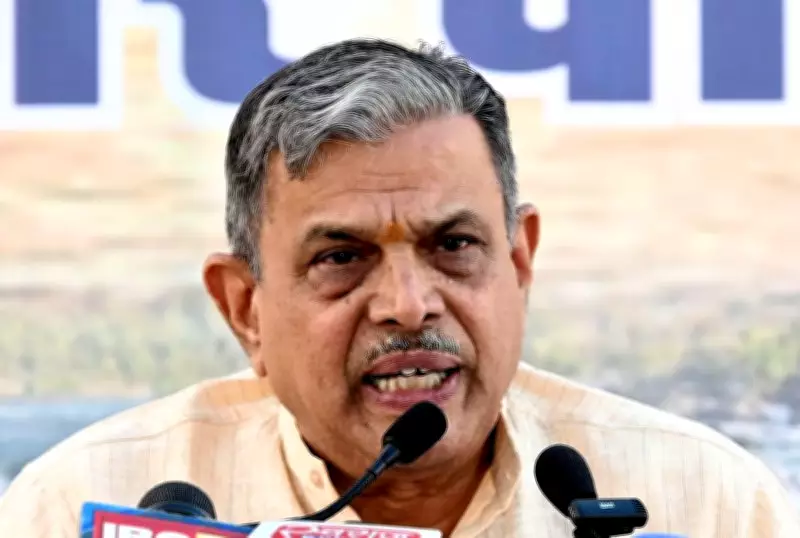
In a significant development, Pakistan has responded positively to the recent call by Rashtriya Swayamsevak Sangh (RSS) leader Dattatreya Hosabale for dialogue between India and Pakistan. The statement from Pakistan's Foreign Office expressed a willingness to engage in meaningful talks to resolve outstanding issues and promote peace in the region.
Hosabale's Call for Dialogue
Dattatreya Hosabale, the general secretary of the RSS, had earlier emphasized the need for dialogue between the two neighboring countries to address bilateral tensions. He stated that both nations should prioritize peaceful resolution of conflicts through diplomatic channels. Hosabale's remarks were seen as a shift in the traditional hardline stance often associated with the RSS.
Pakistan's Positive Response
Pakistan's Foreign Office spokesperson welcomed the statement, noting that it reflects a growing understanding in India about the necessity of dialogue. The spokesperson reiterated Pakistan's longstanding position that constructive engagement is essential for lasting peace and stability in South Asia. Pakistan also called for the resumption of comprehensive talks, including on the core issue of Kashmir.

Implications for Bilateral Relations
This exchange marks a potential thaw in the frosty relations between India and Pakistan, which have been strained over issues such as cross-border terrorism and the Kashmir dispute. Analysts believe that Hosabale's statement could pave the way for informal backchannel communications and possibly lead to official dialogue.
Reactions from India
In India, the response has been mixed. While some political factions have welcomed the openness to dialogue, others remain skeptical about Pakistan's intentions. The Indian government has yet to officially respond to Pakistan's statement, but sources indicate a cautious optimism.
Historical Context
India and Pakistan have a history of fluctuating relations, with periods of intense conflict interspersed with attempts at peace. The last comprehensive bilateral dialogue was suspended in 2016 following a terrorist attack on an Indian army base in Uri. Since then, diplomatic engagement has been limited to meetings on the sidelines of multilateral events.
Future Prospects
The recent development could open new avenues for engagement, especially on issues like trade, people-to-people contacts, and regional security. However, significant challenges remain, including the trust deficit and divergent positions on key issues. The international community, including the United States and China, has urged both countries to resume dialogue.
As the situation evolves, all eyes are on the next steps from both capitals. Whether this leads to a formal dialogue process or remains a symbolic gesture will depend on the political will and strategic calculations of the leadership in New Delhi and Islamabad.






