

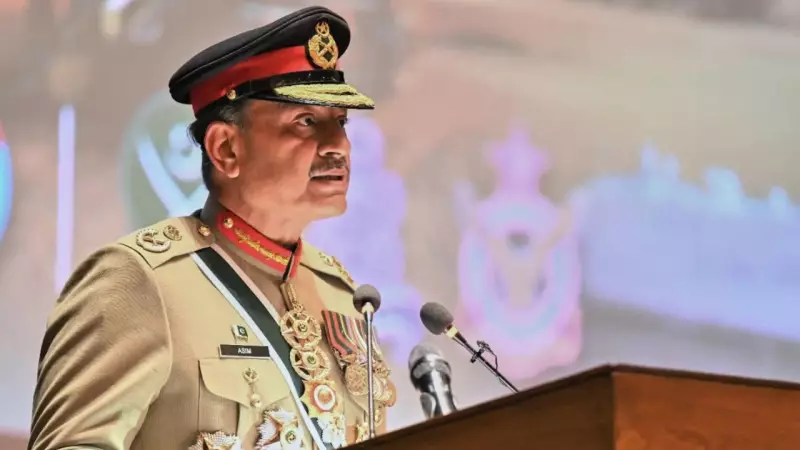
Pakistan's de facto leader and most influential army chief in decades, General Asim Munir, is confronting a major political and diplomatic challenge. The United States is pressuring Islamabad to contribute troops to a proposed international stabilisation force for Gaza, a move that analysts warn could trigger significant domestic unrest within Pakistan.
The US Pressure and Upcoming Washington Meeting
Army Chief Asim Munir, who wields enormous power over Pakistan's political and economic landscape, is scheduled to travel to Washington in the coming weeks. This will be his third meeting with US President Donald Trump in just six months, highlighting the intense diplomatic engagement. According to two sources familiar with the matter, the agenda will heavily focus on Pakistan's potential role in Gaza.
President Trump's proposed 20-point plan for Gaza envisions troops from Muslim-majority nations overseeing a transition period. This phase would concentrate on reconstruction and economic recovery in the Palestinian territory, which has been devastated by over two years of Israeli military bombardment.

"Not contributing could annoy Trump, which is no small matter for a Pakistani state that appears quite keen to remain in his good graces - in great part to secure U.S. investment and security aid," said Michael Kugelman, a Senior Fellow for South Asia at the Washington-based Atlantic Council.
High Stakes and Military Expectations
Many Muslim nations are hesitant to join such a force, primarily because it might involve the contentious task of disarming Hamas, Gaza's Islamist militant group. Analysts caution that this could entangle foreign troops deeper in the conflict and inflame pro-Palestinian and anti-Israeli sentiment back home.
However, Pakistan is in a unique position. It is the world's only Muslim-majority nuclear-armed state with a powerful, battle-hardened military. It has fought three wars with India, a brief conflict earlier this year, and has extensive experience combating insurgencies.
Defence analyst Ayesha Siddiqa notes that this very capability creates higher expectations. Pakistan's military strength means "there is a greater pressure on Munir to deliver his capacity." While Foreign Minister Ishaq Dar stated last month that Pakistan could consider peacekeeping contributions, he clarified that disarming Hamas would not be Islamabad's responsibility.
Unprecedented Power and Domestic Risks
General Munir's position is uniquely powerful. Earlier this month, he was appointed chief of the defence forces, commanding the army, air force, and navy. He also received an extension in his role until 2030. Furthermore, recent constitutional amendments grant him his field marshal rank for life and provide lifetime immunity from criminal prosecution.
"Few people in Pakistan enjoy the luxury of being able to take risks more than Munir. He has unbridled power, now constitutionally protected," Kugelman observed.
Despite this authority, the domestic risks are severe. Any decision to deploy Pakistani troops to Gaza under a US-backed plan could revive large-scale protests by Islamist parties that are staunchly anti-US and anti-Israel. These groups have a proven ability to mobilise thousands on the streets.
In October, authorities banned a powerful and violent Islamist party, arresting its leaders and detaining over 1,500 supporters. Despite the crackdown, analysts believe the group's ideology remains influential.
Additionally, supporters of jailed former Prime Minister Imran Khan, whose party won the most seats in the 2024 elections, are deeply hostile to Munir and could mobilise against him.
Abdul Basit, a Senior Associate Fellow at Singapore's S. Rajaratnam School of International Studies, issued a stark warning: "People will say 'Asim Munir is doing Israel's bidding' - it will be foolhardy of anyone not to see it coming." He cautioned that any escalation following a deployment could spiral quickly out of control.
As Munir consolidates his unprecedented hold on power, his response to the US request for Gaza troops may become the toughest test of his leadership, balancing international diplomacy against volatile domestic politics.






