

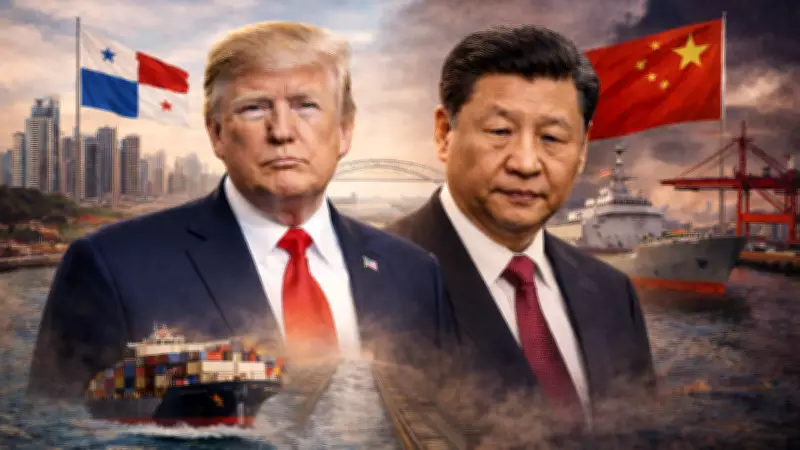
Panama Supreme Court Strikes Down Chinese-Linked Ports Contract in Strategic Victory
In a landmark ruling with far-reaching geopolitical implications, the Supreme Court of Panama has cancelled a major Panama Canal ports contract held by a Chinese-linked firm. The court declared that contracts allowing a subsidiary of Hong Kong-based CK Hutchison Holdings to operate ports at both the Atlantic and Pacific entrances of the canal were unconstitutional, voiding a decades-old arrangement that had become a flashpoint in US-China strategic competition.
Court Ruling Aligns with US Strategic Objectives
The Supreme Court found that laws permitting CK Hutchison Holdings to operate two of the five ports along the Panama Canal violated constitutional provisions. While the ruling is formally rooted in Panamanian constitutional law, its impact extends far beyond national borders, directly advancing a core objective of the Trump administration: reducing Chinese-linked commercial presence near strategic infrastructure that Washington views as critical to national security.
This decision represents a significant setback for Beijing's efforts to defend its commercial footprint abroad while strengthening the US narrative that Chinese-linked companies face growing resistance in international markets. The ruling comes at a particularly sensitive time for China, which had already expressed concerns about CK Hutchison's plans to sell its Panama ports to an international consortium that included BlackRock.

Strategic Importance of Panama Canal Ports
Approximately 5% of global maritime trade transits through the Panama Canal, making control of adjacent port infrastructure a high-stakes issue in the intensifying rivalry between Washington and Beijing. Although the canal itself is operated by Panama's canal authority, port operations at either end of the waterway represent crucial choke points that influence shipping patterns, logistics networks, and security considerations.
The Trump administration had placed the Panama Canal at the center of its foreign policy messaging, repeatedly arguing that China was exercising undue influence over the strategic waterway through port operations. Former President Donald Trump had even suggested that the United States could reclaim the canal if Chinese influence was not rolled back, despite Panama's consistent denials of such influence and assertions of full sovereignty over the waterway.
Panamanian Legal Basis Versus Geopolitical Implications
Panama's government maintains that the Supreme Court ruling is strictly about legal compliance rather than geopolitical considerations. The case originated from a lawsuit filed by Panama's comptroller, Anel Flores, following an audit of the concession's 2021 extension. The audit alleged numerous irregularities including unpaid taxes, accounting discrepancies, and the existence of a "ghost" concession operating within the ports since 2015.
Flores estimated that these irregularities cost the Panamanian government approximately $300 million since the extension and around $1.2 billion during the original 25-year contract period. The comptroller also noted that the extension lacked required approvals from his office, providing the legal foundation for the constitutional challenge.
Immediate Consequences and Future Implications
The Supreme Court ruling has created immediate uncertainty about who will operate the affected ports and how Panama will proceed with port management. Legal experts suggest the decision could force Panama to restructure its legal framework for port concessions and potentially re-open bidding for the terminals.
CK Hutchison has limited legal recourse since the ruling cannot be appealed, though the company could seek clarification or pursue international arbitration. Winston Ma, an adjunct law professor at New York University, noted that "there is a long list of precedents where states clawed back control of ports and other infrastructure from private or foreign operators" and that "concession contracts typically reserve to governments the right to terminate for cause or public interest."

Broader Geopolitical Context
This development underscores how legal rulings, trade infrastructure, and geopolitics are becoming increasingly intertwined in the current era of strategic competition. For the United States, the Panama court decision provides tangible evidence supporting arguments that sustained pressure can roll back Chinese-linked influence at critical global chokepoints.
For China, the ruling highlights the limitations of Beijing's ability to protect overseas commercial interests when host governments and courts align - either overtly or implicitly - with US strategic priorities. The case has also thrust Hong Kong billionaire Li Ka-shing into the middle of the US-China power struggle, with his conglomerate facing pressure from both sides despite having steadily reduced its exposure to mainland China in recent years.
As competition over global trade routes intensifies, the Panama Canal has re-emerged not merely as a vital shipping artery but as a frontline in the broader contest between Washington and Beijing for influence over critical infrastructure that shapes global commerce and security dynamics.





