

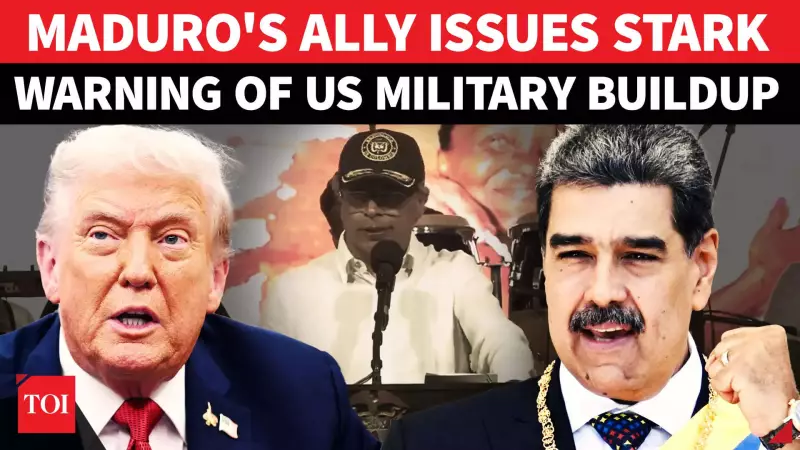
In a powerful and provocative address, Colombian President Gustavo Petro has issued a stark warning against potential United States military intervention in Latin America, drawing a direct and controversial parallel to a dark chapter in his nation's history.
Historical Parallels to the 1928 Banana Massacre
Speaking at a commemorative event in the town of Ciénaga on December 7, 2025, President Petro invoked the memory of the 1928 Banana Massacre. He recalled how Colombian troops, under pressure from foreign corporate and political interests, once opened fire on striking banana plantation workers, resulting in a tragic loss of life.
Petro argued that similar external threats are re-emerging in the present day. He pointed to recent U.S. naval operations in the Caribbean, deadly strikes on vessels in the region, and a specific incident from last year where a Colombian fisherman was killed during a U.S. military operation. For Petro, these actions signal a dangerous pattern of external force being projected onto Latin American soil.

A Call for Regional Unity Against External Threats
The Colombian leader's speech transcended national borders, transforming into a rallying cry for regional solidarity. He urgently called upon the nations of Latin America to stand together in a united front. Petro framed this unity as essential for self-defence against what he characterised as the looming threat of foreign invasion.
"Latin America must defend itself," Petro declared, emphasising that the region cannot allow history to repeat itself. His core message was a passionate plea that weapons must never again be turned against the poor and the working class of the continent, whom he sees as the primary victims of such geopolitical manoeuvres.
Implications for US-Colombia and Regional Relations
This fiery speech is set to have significant diplomatic repercussions. By directly challenging the United States and framing its military activities as a prelude to invasion, Petro has taken a bold and confrontational stance. His rhetoric marks a sharp departure from the traditionally close security partnership between Colombia and the U.S.
The address underscores a growing sentiment among some left-leaning governments in Latin America that seek greater autonomy and distance from Washington's influence. Petro's strategy appears to be one of mobilising historical grievance and current military incidents to forge a pan-Latin American identity centred on resistance to perceived Northern hegemony. The international community will be watching closely to see how the U.S. responds and whether other regional leaders echo Petro's call for a defensive alliance.






