

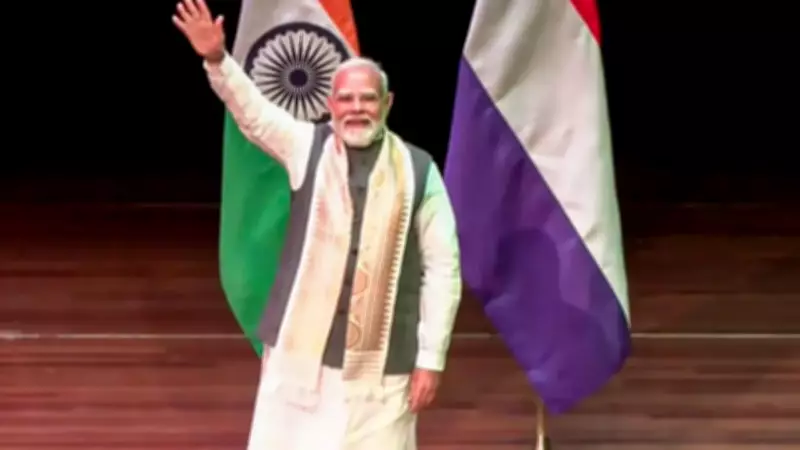
NEW DELHI: Prime Minister Narendra Modi's visit to the Netherlands concluded on Sunday with a total of 17 outcomes, encompassing agreements on migration and mobility, green hydrogen, and defence cooperation. Alongside discussions on the war in Ukraine, Modi and Dutch Prime Minister Rob Jetten addressed the situation in West Asia, calling for freedom of navigation and the uninterrupted global flow of commerce through the Strait of Hormuz. They opposed any restrictive measures and reaffirmed their support for ongoing efforts and initiatives in this regard.
Joint Statement on West Asia and Ceasefire
Both leaders expressed deep concern over the situation in West Asia, noting its serious implications for the region and the wider world, including immense human suffering and disruptions to global energy supplies and trade networks. A joint statement welcomed the ceasefire announced on April 8.
Response to Media Queries on Minority Rights
The Indian government brushed aside questions from local media based on purported remarks by the Dutch PM on minority rights and press freedom in India. MEA Secretary (West) Sibi George stated, "We face these kinds of questions basically because of lack of understanding on the part of the person who asks them. You need to have more understanding of India to appreciate what India is." He also clarified that he had not seen any such statement by the Dutch PM.

Strategic Partnership and Semiconductor Agreement
The visit also saw the two countries upgrading their relationship to a strategic partnership and signing an agreement to support India's semiconductor fabrication plant in Gujarat.
Condemnation of Pahalgam Terror Attack
According to the joint statement, Jetten strongly condemned the Pahalgam terror attack and expressed the Netherlands' solidarity and unwavering support to India in its fight against terrorism, including cross-border terrorism. The two prime ministers unequivocally condemned terrorism in all its forms and manifestations, calling for a zero-tolerance approach and rejecting double standards in countering terrorism.
Defence Industrial Cooperation
The countries also signed a letter of intent to further explore defence industrial cooperation, including the possibility of establishing a roadmap for the manufacturing of defence equipment, components, and other key capabilities through co-development, transfer of technology, and joint ventures.






