

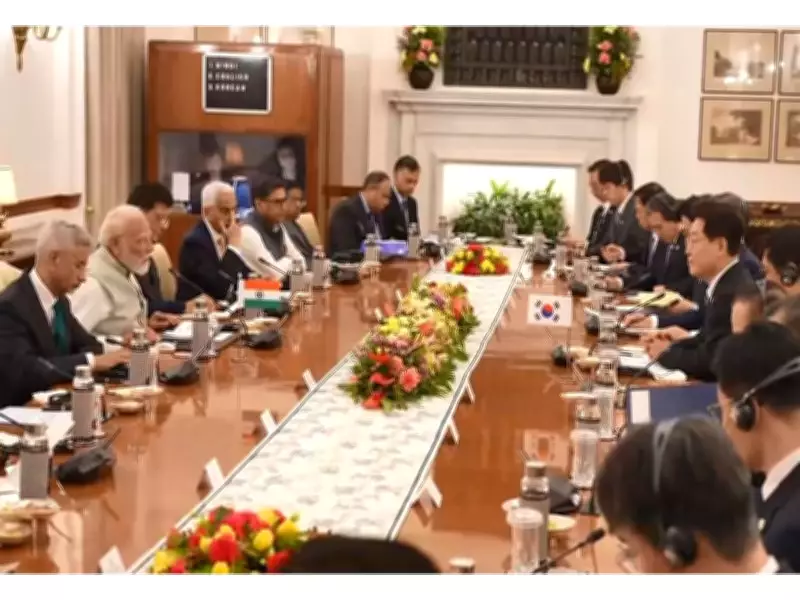
PM Modi and South Korean President Lee Jae-myung Engage in High-Level Strategic Dialogue
Prime Minister Narendra Modi and South Korean President Lee Jae-myung convened for a significant delegation-level meeting aimed at bolstering the strategic partnership between India and South Korea. This high-level engagement underscores the commitment of both nations to deepen their bilateral relations across multiple sectors, including trade, technology, and regional security.
Focus on Strengthening Economic and Technological Cooperation
The discussions centered on enhancing economic ties, with a particular emphasis on increasing bilateral trade and investment flows. Both leaders explored opportunities for collaboration in cutting-edge technology sectors such as artificial intelligence, semiconductors, and renewable energy. The talks also addressed ways to streamline trade policies and reduce barriers to foster a more robust economic partnership.
Regional Security and Diplomatic Coordination
In addition to economic matters, the dialogue included a thorough review of regional security challenges. Prime Minister Modi and President Lee Jae-myung exchanged views on maintaining stability in the Indo-Pacific region and coordinating efforts on global issues. This aspect of the talks highlighted the shared strategic interests of India and South Korea in promoting peace and security.

Key Outcomes and Future Prospects
The meeting resulted in a mutual agreement to intensify cooperation in defense and maritime security, reflecting the growing strategic alignment between the two countries. Both sides expressed optimism about the future of their partnership, with plans to hold regular high-level exchanges and joint initiatives. This engagement is expected to pave the way for enhanced collaboration in areas such as infrastructure development and cultural exchanges.
Conclusion: The delegation-level talks between PM Modi and President Lee Jae-myung mark a pivotal step in reinforcing the strategic ties between India and South Korea. By addressing critical areas of mutual interest, this dialogue sets a positive trajectory for future cooperation, contributing to regional stability and economic growth.






