

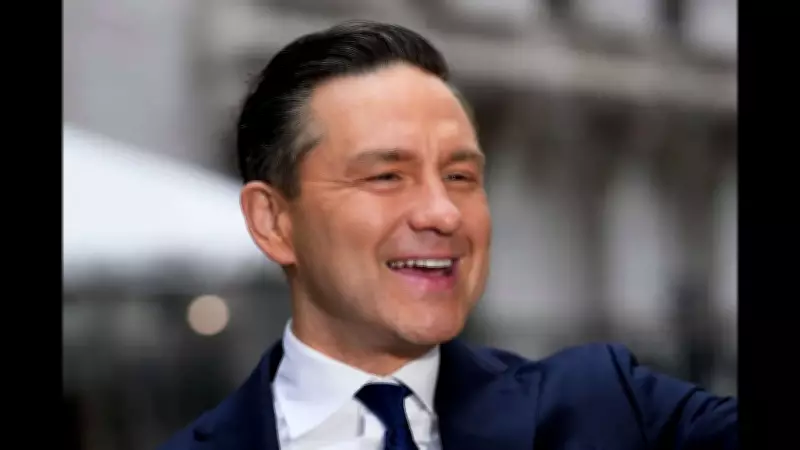
Canadian Opposition Leader Pierre Poilievre Makes Waves on Joe Rogan Podcast
In a significant media appearance, Canada's Conservative Party leader Pierre Poilievre engaged in a wide-ranging discussion on the popular Joe Rogan Podcast. The conversation covered critical topics including US-Canada trade relations, political dynamics, and bizarre conspiracy theories that have circulated in political discourse.
Firm Rejection of Trump's 51st State Proposal
Poilievre delivered a definitive response to former US President Donald Trump's recurring suggestion that Canada should become the 51st state of America. "We're very proudly Canadian so we're never gonna be the 51st state," Poilievre stated emphatically during the podcast interview. He expressed frustration with the continued discussion of this idea, saying, "I just wish he'd knock that off so that we can get back to talking about the things that we could do as two separate countries that are actually friends."
Host Joe Rogan echoed Poilievre's sentiment, characterizing Trump's proposal as a "crazy thing to say" that undermines the genuine friendship between the neighboring nations.

Trade Tariffs and Economic Cooperation
A central focus of Poilievre's appearance was addressing the economic impact of US tariffs on Canadian goods. The opposition leader argued that these tariffs are counterproductive for both nations. "The US tariff on Canadian goods is making life more expensive for Americans," Poilievre explained, highlighting the interconnected nature of the North American economy.
He advocated for removing trade barriers, stating, "We should get the tariffs out because there's so much we could be doing together as neighbours and partners if we got rid of those tariffs." Poilievre emphasized that eliminating these obstacles would foster greater economic collaboration and benefit consumers on both sides of the border.
Addressing Bizarre Conspiracy Theories
During the conversation, Rogan referenced the long-standing conspiracy theory that former Prime Minister Justin Trudeau is the biological son of Cuban revolutionary leader Fidel Castro. When Rogan jokingly referred to Castro as "Justin's dad," Poilievre immediately corrected the record.
"Justin Trudeau's father was another Pierre -- Pierre Trudeau," Poilievre clarified, putting to rest the unfounded speculation that has circulated in certain political circles for years. This moment highlighted how even prominent media figures sometimes perpetuate baseless theories that require factual correction.
Relationship with Mark Carney and National Unity
Poilievre revealed an unexpectedly cordial relationship with former Bank of Canada governor Mark Carney, who has been mentioned as a potential political rival. Despite their different political affiliations, Poilievre described ongoing communication with Carney during his US tour.
"Even in my visit down here, I'm sending him text messages to tell him what's going on, to try and support his work because we both want what's best for Canada," Poilievre shared. He notably refrained from criticizing Carney on foreign soil, demonstrating political decorum during international engagements.
On the topic of national unity, Poilievre addressed speculation about Alberta potentially holding a referendum to separate from Canada. The Conservative leader firmly stated that such a separation "will never happen," expressing confidence in Canada's enduring federal structure despite regional tensions.
Strategic Media Engagement
Poilievre explained his decision to appear on the controversial but influential podcast, noting that he agreed to participate specifically to discuss US tariffs on Canada. This strategic media move represents a calculated effort to reach American audiences and influence cross-border policy discussions.
The appearance signals a modern approach to political communication, where leaders engage with non-traditional media platforms to bypass conventional gatekeepers and speak directly to diverse audiences. Poilievre's willingness to address both serious policy matters and sensational conspiracy theories demonstrates the complex media landscape contemporary politicians must navigate.

This podcast appearance comes at a crucial time for US-Canada relations, with trade issues, border security, and geopolitical alignment all requiring careful diplomatic management. Poilievre's comments reflect ongoing efforts to maintain the special relationship between the two nations while asserting Canada's distinct national identity and sovereignty.





