

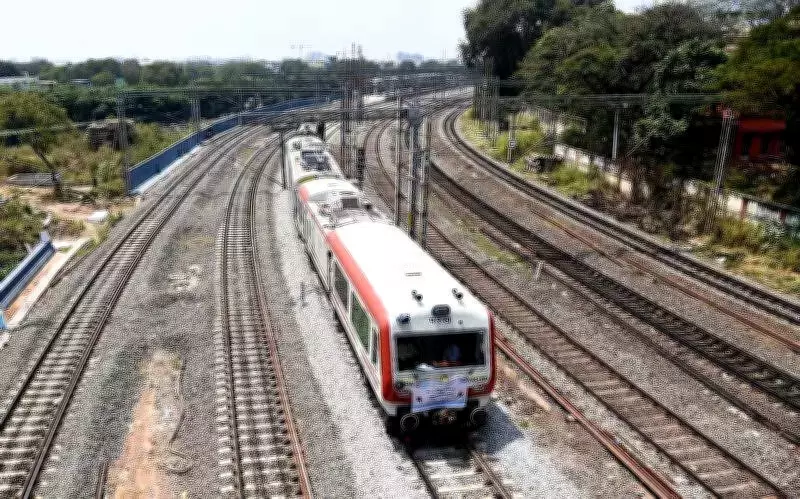
Pune-Mumbai Rail Connectivity Project Stalled at Railway Ministry Level
The critical project to enhance rail connectivity between Pune and Mumbai by adding third and fourth lines on the Pune-Lonavla stretch remains in limbo, with the Indian Railways yet to grant approval more than four months after the Maharashtra government gave its in-principle nod. This delay persists despite worsening traffic congestion on the Pune-Mumbai Expressway, where recent incidents have caused gridlocks exceeding thirty hours.
Project Status and Financial Framework
Sunil Udasi, Chief Public Relations Officer of the Mumbai Rail Vikas Corporation (MRVC), confirmed that the Pune-Lonavala quadrupling project received in-principle approval from the state government in September last year through a government resolution. The cost-sharing agreement was established on a 50:50 basis between the state and central governments.
"The proposal is presently under active consideration with the ministry of railways for further examination and necessary approvals," Udasi stated. The MRVC, a subsidiary of the railway ministry, is handling this significant infrastructure initiative.

Swapnil Nila, CPRO of Central Railway, indicated that the project remains in its preliminary stages. The total estimated cost stands at Rs 5,100 crore, with the state's projected contribution amounting to Rs 2,550 crore.
Funding Distribution and Local Contributions
The financial breakdown for the state's share, as outlined in September last year, includes:
- Pune Municipal Corporation: 20% contribution
- Pimpri Chinchwad Municipal Corporation: 20% contribution
- Pune Metropolitan Region Development Authority: 30% contribution
- Maharashtra State Government: Remaining 30% contribution
This collaborative funding model represents a significant investment in regional transportation infrastructure aimed at alleviating the chronic traffic problems between India's economic capital and its important educational and IT hub.
Expressway Crisis Highlights Urgent Need
The urgency for improved rail connectivity was starkly demonstrated last week when an accident involving a gas tanker created a massive gridlock on the Pune-Mumbai Expressway, stranding travelers for over thirty hours. The following weekend also witnessed severe traffic disruptions, causing major inconveniences for commuters and highlighting the expressway's vulnerability to such incidents.
Railway Committee Members Voice Concerns
Anand Saptarshi, a member of the Zonal Railway Users' Consultative Committee (ZRUCC), emphasized the pressing need for enhanced rail infrastructure. "The Mumbai–Pune high-speed rail corridor was announced in the Budget, but it will take a long time to materialize," he noted. "Considering the persistent traffic on the expressway, focus should shift to strengthening the conventional rail network between the two cities."
Saptarshi confirmed that this critical issue will be raised in the upcoming ZRUCC meeting next month, reflecting growing frustration among stakeholders about infrastructure delays.
Nikhil Kachi, a former member of the divisional railway users' consultative committee, echoed these sentiments, criticizing the pattern of announcing new projects without ensuring completion of previously approved plans. "The idea of announcing projects after projects without looking into the completion aspect of formerly announced plans needs to stop," Kachi asserted, highlighting a systemic issue in transportation planning.
Public Perspective and Practical Concerns
Balewadi resident Prashant Dhobale, an IT professional, expressed practical concerns about regional connectivity. "When the Navi Mumbai International Airport became operational, I thought I would use it more than the Pune facility," Dhobale explained. "But looking at the current traffic situation, I am apprehensive now. A proper rail network needs to connect both cities comprehensively, including access to the airport."
This sentiment reflects broader public anxiety about transportation reliability between Pune and Mumbai, two cities whose economic and social connections continue to deepen despite infrastructure challenges.

The ongoing delay in railway approvals for the Pune-Lonavla quadrupling project represents a significant bottleneck in regional development, with stakeholders across government agencies, consultative committees, and the traveling public increasingly vocal about the need for decisive action to improve connectivity between Maharashtra's two major urban centers.





