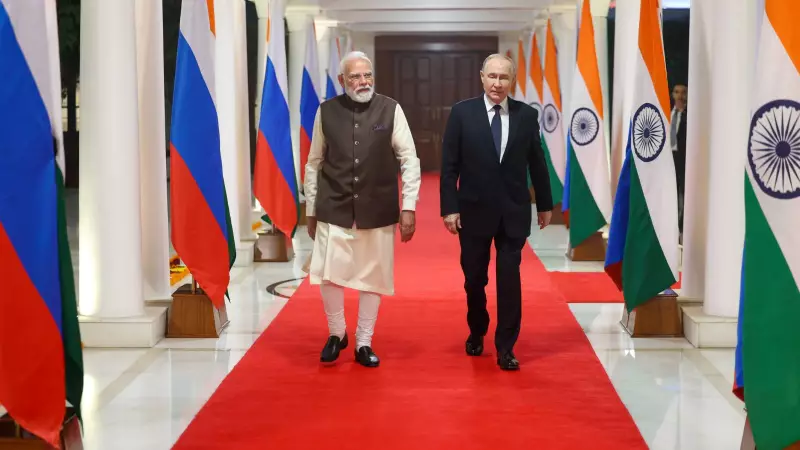
Russian President Vladimir Putin's state visit to India in December 2025, his first since the Ukraine war began in 2022, has ignited a fresh diplomatic debate. The trip underscores India's delicate balancing act between its historic partner, Russia, and its growing strategic ties with the West. However, a growing consensus suggests that for this crucial partnership to endure, Russia must now shoulder a fair share of the responsibility.
The Diplomatic Tightrope and Russia's Isolation
The visit was immediately preceded by public criticism from the heads of French, German, and British missions in India, who accused Russia of sabotaging peace in Europe. The Russian ambassador retaliated, defending Moscow's actions and blaming Europe. This exchange highlighted the intense pressure on New Delhi. Four years post-invasion, Russia finds itself isolated within the international economic order. Its economy, while deeply integrated globally, is vulnerable. Its major energy exports are largely substitutable, forcing it to sell resources at heavily discounted prices.
Even China, Russia's most powerful partner, has been unable to fully shield it from economic consequences. Fears of secondary sanctions have reportedly led Beijing to halt some payment settlements, with much trade forced into underground channels. This reality limits what India, or any single nation, can do to alleviate Russia's economic strain.
The Imperative for Balanced Expectations
It is increasingly viewed as unfair to expect India to carry the disproportionate burden of sustaining bilateral relations. The extent of future India-Russia economic engagement will inevitably be shaped by the state of Russia's ties with the West. Furthermore, merely ending the war in Ukraine is insufficient. The terms of any peace agreement are critical; if perceived as unjust, they will continue to hamper Russia's global integration.
An isolated Moscow, combined with India's deepening integration with the US-led West, creates a scenario where both nations become susceptible to Western pressure. In such a clash, India might again be forced into difficult choices. Therefore, Russia's actions must aim to relieve India of this untenable burden.
Reciprocity in Strategic Partnerships
This brings the focus to a persistent friction point: India's relationship with the United States. Russian Foreign Minister Sergey Lavrov has been a vocal critic of India's membership in the Quad and its warming ties with Washington. However, there is a clear need for reciprocal understanding. If Moscow expects New Delhi to maintain a measured stance regarding Russia's own close partnership with China, it must extend the same courtesy concerning the India-US strategic partnership.
The logic behind India's proximity to the West is primarily a response to China's assertive posture and enmity towards India, not an intent to undermine Russia. While Russia remains an indispensable friend and partner for India, the consequences of Moscow's geopolitical decisions cannot be outsourced for New Delhi to manage alone. The onus is now on the Kremlin to act in a manner that ensures the historic India-Russia relationship evolves on a stable, balanced, and sustainable path for the future.