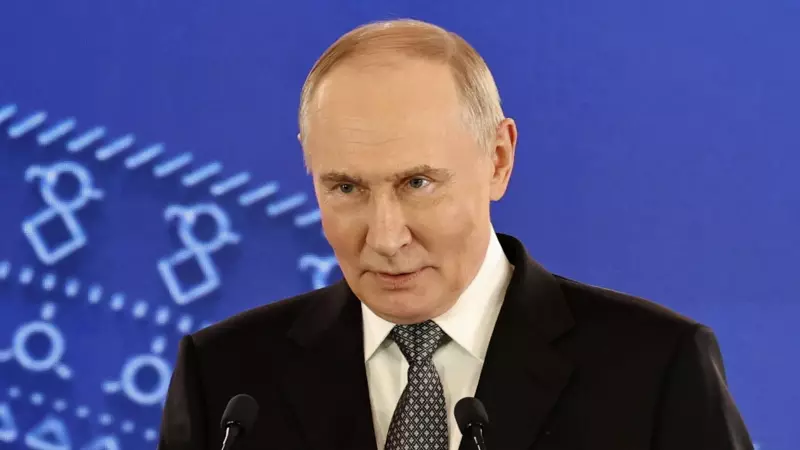
In a significant move to bolster media ties and forge an alternative to Western narratives, Russian President Vladimir Putin officially launched the Indian arm of the state-funded Russia Today (RT) network in New Delhi on Friday, December 5, 2025. The high-profile event coincided with the signing of five major media collaboration agreements between India's public broadcaster Prasar Bharati and leading Russian media organisations.
A Strategic Media Expansion
The launch ceremony, held at a five-star hotel in the national capital, featured Putin alongside Margarita Simonyan, Editor-in-chief of the Rossiya Segodnya media group which operates RT. The newly inaugurated RT India represents the broadcaster's largest overseas venture, boasting a state-of-the-art studio in Delhi and a team of over 100 professionals.
According to a statement from the broadcaster, RT India will roll out four daily news programmes in English. The channel explicitly aims to strengthen the traditional bond between India and Russia while amplifying the two nations' influence in an increasingly multipolar world order.

Five Pacts to Deepen Collaboration
Parallel to the launch, the Ministry of External Affairs confirmed the signing of five Memoranda of Understanding (MoUs) between Prasar Bharati and Russian entities. These agreements are with:
- Joint Stock Company Gazprom-media Holding
- National Media Group
- BIG ASIA Media Group
- ANO TV-Novosti (which owns RT India)
- TV BRICS
The MoUs are designed to broaden cooperation in broadcasting, content sharing, and information exchange. Notably, while Prasar Bharati already had an existing agreement with TV-Novosti, an addendum to this pact was signed on Friday in the presence of President Putin and Indian Prime Minister Narendra Modi.
Countering Western Media Dominance
This flurry of media diplomacy is widely seen as part of a concerted strategy by Moscow and New Delhi to create independent platforms that reflect their national perspectives and shared worldview. The collaborations emerging from these five pacts are expected to facilitate more joint ventures in the coming days.
The underlying objective is to bypass what both nations perceive as a Western monopoly in the global media space. By pooling resources and expertise, India and Russia intend to build a robust media architecture that offers an alternative narrative on international affairs, one that aligns with their strategic interests and vision for a multipolar world.
The launch of RT India and the signing of multiple media agreements mark a new chapter in India-Russia relations, extending their longstanding partnership from defence and energy into the influential realm of information and broadcasting.