

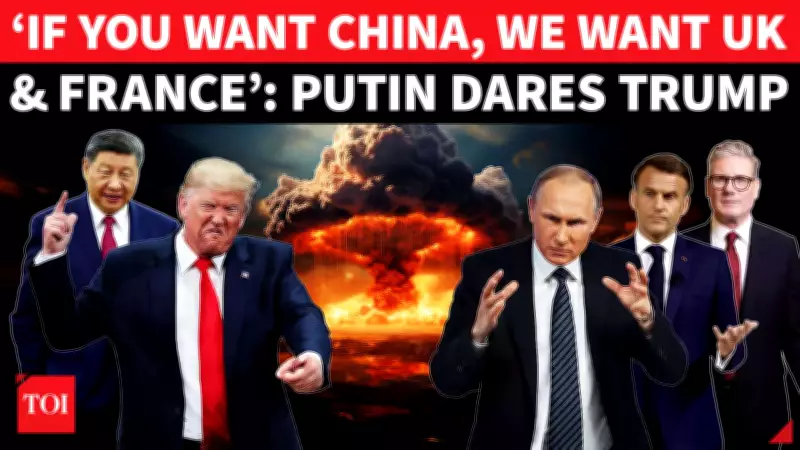
Putin Rejects US Nuclear Framework, Insists on Including Britain and France
Global nuclear diplomacy has reached a critical juncture, with the expiration of the last major arms control treaty creating a dangerous vacuum in international security. The United States is urgently advocating for a new three-way nuclear agreement involving Russia and China, but Moscow is firmly rejecting this proposal. President Vladimir Putin's administration has established a clear and uncompromising position, declaring that Russia will not participate in any negotiations unless the United Kingdom and France are also included at the bargaining table.
The Russian leadership has characterized the US-proposed framework as fundamentally incomplete and inequitable, arguing that it fails to address the broader European nuclear landscape. This hardline stance from the Kremlin places significant pressure on Washington and complicates efforts to establish a new regulatory structure for the world's most powerful arsenals.
Escalating Tensions and the Threat of an Uncontrolled Arms Race
American officials have issued stark warnings about the potential consequences of this diplomatic deadlock, highlighting the imminent risk of an uncontrolled nuclear arms race. Particular concern is directed toward China's rapidly expanding and unconstrained arsenal, which operates without the limitations that previously governed US and Russian stockpiles. The absence of any binding treaties has created an unprecedented situation where the planet's largest nuclear powers face no legal restrictions on their weapons development and deployment.

This high-stakes confrontation is unfolding at what many experts describe as the world's most perilous negotiating table. The international community is watching with intense apprehension as these nuclear-armed nations navigate this diplomatic crisis. The fundamental question dominating global security discussions is whether diplomatic solutions can still prevail or if humanity has already entered a new and more dangerous nuclear era characterized by proliferation and competition.
The Broader Context of Global Nuclear Diplomacy
The current impasse reflects deeper geopolitical shifts and longstanding tensions in international relations. Russia's demand for British and French participation underscores Moscow's perspective that nuclear arms control cannot be isolated to a select few powers when other nations maintain significant strategic capabilities. This position challenges the traditional bilateral or trilateral approaches that have dominated nuclear diplomacy for decades.
As the situation continues to develop, the window for constructive dialogue appears to be narrowing. The expiration of the previous treaty has removed the safety net that provided transparency and predictability between nuclear powers. Without a new framework, the risk of miscalculation, escalation, and renewed arms competition increases substantially. The outcome of this diplomatic confrontation will likely shape global security architecture for generations to come, determining whether the international community can establish effective controls over humanity's most destructive weapons or if we are destined for a future of nuclear uncertainty and danger.






