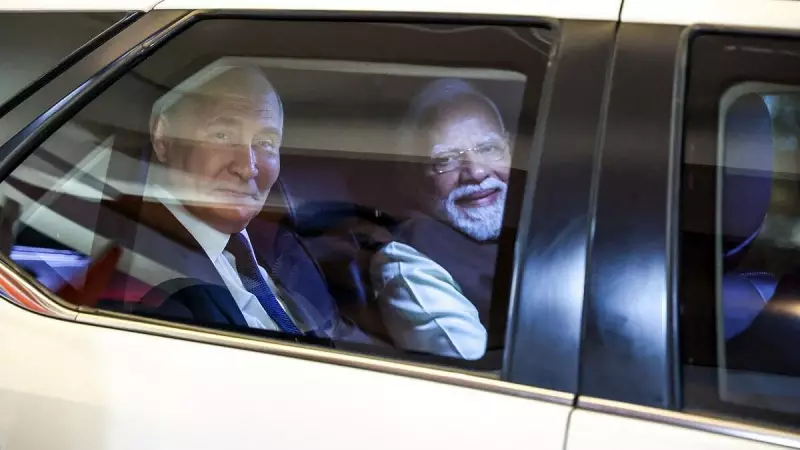
Russian President Vladimir Putin has firmly stated that the strategic partnership between India and Russia is not targeted against any other nation. His comments come amidst a global landscape where New Delhi's deepening energy and economic cooperation with Moscow has drawn significant attention.
Putin Defends Bilateral Ties, Criticizes External Pressure
In a clear message to the international community, Putin addressed the context of India's robust energy relations with Russia. He pointed out that certain global 'actors' are displeased with New Delhi's expanding role in international markets, a development they link to India's close relationship with Moscow. The Russian leader made these remarks, which were reported by PTI, on 04 December 2025.
Putin emphasized that these elements are actively working to constrain India's growing influence for their own political motives. Their method, according to him, involves the creation of 'artificial obstacles' designed to hinder India's progress and standing on the world stage.
The Context of Energy and Strategic Collaboration
The partnership between India and Russia, particularly in the energy sector, has become a cornerstone of their bilateral relations. India has significantly increased its imports of Russian oil following geopolitical shifts, making it a critical player in global energy markets. This move has provided India with a strategic economic advantage while offering Russia a stable market.
However, this mutually beneficial arrangement has not been viewed favorably by all quarters. Putin's statement directly challenges the narrative that the India-Russia axis is formed in opposition to other blocs or countries. Instead, he frames it as a sovereign choice between two independent nations.
Implications for India's Foreign Policy and Global Stance
Putin's defense of the relationship underscores India's delicate balancing act in its foreign policy. Under the leadership of Prime Minister Narendra Modi, India has maintained its long-standing ties with Russia while simultaneously strengthening partnerships with Western nations and other regional powers.
The Russian President's remarks highlight a key challenge for New Delhi: navigating external pressure while protecting its core national interests. The accusation of artificial obstacles suggests a belief that non-market forces are being deployed to limit India's strategic autonomy and economic benefits derived from its Russian engagement.
This public support from Moscow reinforces the durability of the India-Russia relationship, suggesting it will remain a significant feature of the global geopolitical order despite external criticisms. The development signals that both nations are prepared to defend their collaborative ventures as legitimate and independent of third-party influence.