

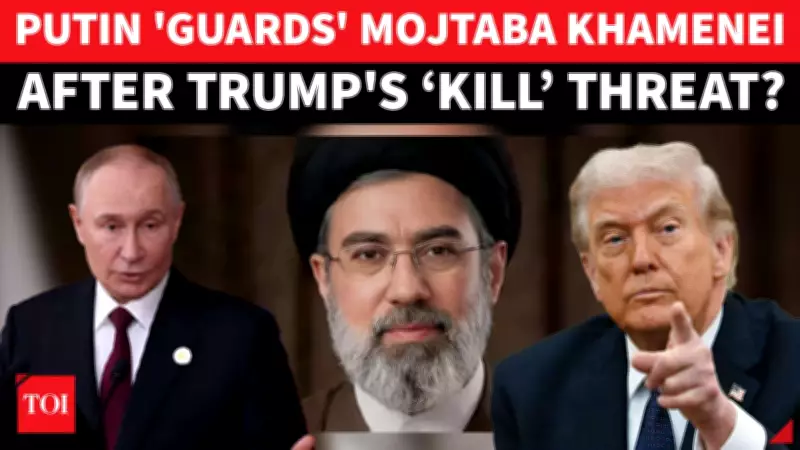
Putin's Strong Support for Iran's New Leadership Amid Rising Global Tensions
Russian President Vladimir Putin has issued a powerful public statement backing Iran during a critical leadership transition in Tehran. This development comes as international tensions involving Iran, the United States, and Israel reach a boiling point, with direct threats targeting the highest echelons of Iranian authority.
Official Congratulations and Solidarity Declaration
In a significant diplomatic move, President Putin formally congratulated Mojtaba Khamenei on his ascension to the position of Iran's Supreme Leader. This follows the passing of Ayatollah Ali Khamenei, marking a pivotal moment in Iranian governance. Moscow's statement characterized the current geopolitical climate as a period of "armed aggression" directed against Iran, explicitly reaffirming Russia's unwavering solidarity with Tehran.
The timing of this endorsement is particularly noteworthy, as it coincides with escalating rhetoric and military posturing from Western nations. The Kremlin's message serves as a clear counterbalance to the pressure being exerted on Iran, positioning Russia as a key ally in a volatile regional landscape.

Context of Escalating Threats and Regional Instability
The backdrop to Putin's declaration is a rapidly deteriorating security situation. Threats against Iran's leadership have intensified, contributing to an atmosphere of heightened alert and potential conflict. This support from Russia is interpreted by analysts as a strategic maneuver to bolster Iran's position and deter further external pressures.
Observers note that this public backing could influence the dynamics of ongoing diplomatic and military standoffs, potentially complicating efforts by the United States and Israel to isolate Iran. The reaffirmation of the Moscow-Tehran alliance underscores the deepening geopolitical divides and the complex web of international relations in the Middle East.
Broader Implications for International Relations
Putin's statement is more than a routine diplomatic gesture; it is a calculated political signal with far-reaching consequences. By framing the situation as "armed aggression," Russia is aligning itself firmly with Iran's narrative and challenging the actions and statements emanating from Washington and Tel Aviv.
- Strengthened Iran-Russia Axis: This public support solidifies the strategic partnership between Moscow and Tehran, which has been growing in recent years across economic, military, and political spheres.
- Increased Diplomatic Tensions: The move is likely to exacerbate existing frictions between Russia and Western powers, adding another layer of complexity to global diplomacy.
- Potential for Escalation: With such high-level endorsements, the risk of miscalculation or provocation increases, raising concerns about broader regional instability.
As the world watches these developments unfold, the alignment between Russia and Iran represents a significant shift in the balance of power, with implications for international security, energy markets, and diplomatic efforts in one of the world's most volatile regions.






