

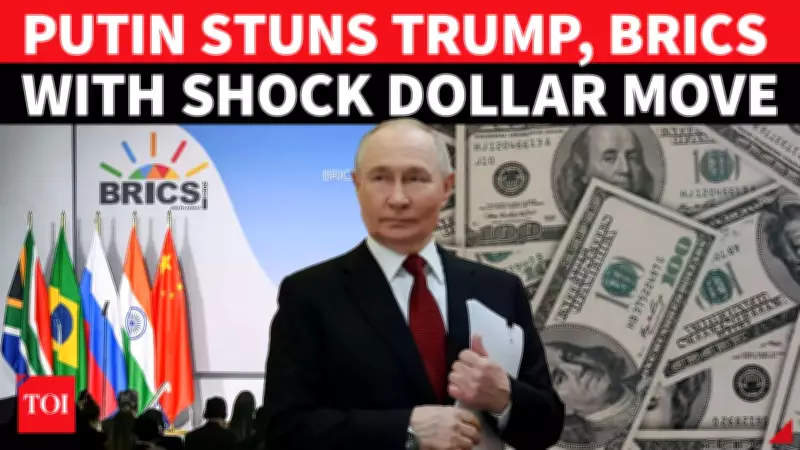
Putin's Surprising Dollar Proposal Stuns Trump Administration, Sends Shockwaves Through BRICS
In a development that has caught global observers off guard, an internal Kremlin memorandum obtained by Bloomberg outlines a bold economic cooperation plan between Russia and the incoming Trump administration. The proposal, which includes a potential return to the U.S. dollar settlement system, could dramatically alter the geopolitical landscape and has put BRICS nations on high alert.
Details of the Kremlin's Sweeping Economic Blueprint
The comprehensive document details several key areas of proposed collaboration between Moscow and Washington. Joint investments in strategic sectors such as oil, gas, and critical minerals form a cornerstone of the plan. Additionally, the memo calls for expanded cooperation in nuclear energy and aviation technology, along with preferential treatment for American corporations operating in Russia.
Most notably, the proposal suggests a significant shift back to dollar-based transactions for international trade and settlements. This represents a stark reversal from Russia's multi-year campaign to reduce its dependence on the U.S. currency following sanctions imposed after the Ukraine conflict. The move would mark one of the most substantial economic policy turnarounds in recent memory.

Potential Global Ramifications and Geopolitical Repercussions
Financial analysts and geopolitical experts are weighing the far-reaching consequences of such a development. A Russian return to the dollar system could:
- Reshape global financial markets and currency dynamics
- Significantly impact the growing economic partnership between Russia and China
- Alter the balance of power within the BRICS alliance
- Undermine efforts to establish alternative reserve currencies
- Create new tensions between traditional U.S. allies and emerging economic blocs
The proposal comes at a particularly sensitive time in international relations, with the Trump administration preparing to take office and global economic alliances in flux. The potential warming of U.S.-Russia economic ties stands in contrast to recent diplomatic tensions and could signal a new era of pragmatic engagement between the two powers.
Broader Context and Strategic Implications
This development must be understood within the larger framework of shifting global alliances and economic realignments. Russia's apparent willingness to reconsider its dollar de-risking strategy suggests several possible motivations:
- A calculated move to gain economic leverage during a period of global uncertainty
- An attempt to drive a wedge between the United States and its traditional allies
- A pragmatic recognition of the dollar's continued dominance in global finance
- A strategic play to secure favorable terms in upcoming negotiations with the Trump administration
The response from BRICS nations—particularly China—will be closely watched, as any significant rapprochement between Russia and the United States could challenge the cohesion of alternative economic blocs that have sought to reduce Western financial influence.
As this story develops, international markets and diplomatic circles remain on edge, anticipating how this unexpected proposal might transform global economic relationships and power structures in the coming months.






