

Putin's Uranium Custody Offer to Trump Rejected Amid Escalating US-Iran Conflict
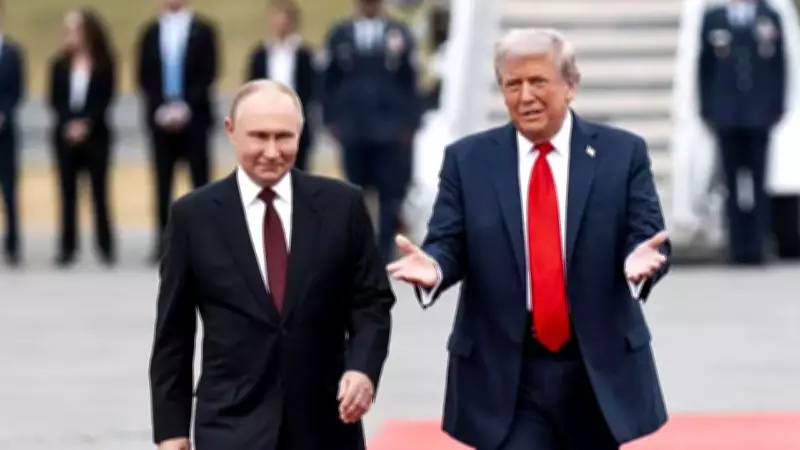
In a significant diplomatic development, Russian President Vladimir Putin proposed during a phone call with US President Donald Trump this week that Russia take custody of Iran's stockpile of enriched uranium. This proposal was part of a broader initiative aimed at ending the ongoing war between the United States and Iran, leveraging the shifting geopolitical dynamics in the Middle East. However, according to an exclusive report by Axios, President Trump declined the offer, highlighting the complex negotiations surrounding Iran's nuclear capabilities.
Escalation of Middle East Tensions and Nuclear Concerns
The situation in the Middle East has intensified dramatically following a ruthless military offensive launched by Donald Trump against the Tehran regime, led by Ayatollah Ali Khamenei, who was subsequently killed. Long frustrated with Iran's persistent nuclear ambitions, the joint American-Israeli operation targeted key nuclear and military sites across Iran. This aggressive action has left Iran significantly weakened and enraged, triggering a wave of retaliatory attacks throughout the Gulf region, further destabilizing the area.
One of the primary objectives for the United States and Israel in this conflict remains securing Iran's substantial stockpile of 450 kilograms of 60%-enriched uranium. This material is highly concerning as it can be converted to weapons-grade uranium within a matter of weeks, providing enough fissile material for more than ten nuclear bombs. The urgency to control this stockpile underscores the high stakes involved in the ongoing hostilities.

Putin's Proposal: A Theoretical Solution to a Nuclear Dilemma
In theory, Vladimir Putin's proposal could offer a viable pathway to remove Iran's nuclear stockpile without necessitating the deployment of US or Israeli ground troops. The idea centers on Russia taking custody of the enriched uranium, leveraging its advanced nuclear capabilities and prior experience. Notably, Russia had previously stored Iran's low-enriched uranium under the terms of the 2015 nuclear deal, making it one of the few nations with the technical expertise and infrastructure to handle such sensitive material safely.
During the phone call with President Trump on Monday, Putin reportedly raised several suggestions aimed at de-escalating the war between the United States and Iran, with the uranium custody proposal being a key component. This is not the first time such an offer has been made; Russia had floated similar proposals during US-Iran nuclear negotiations in May, prior to the attacks on Iran's nuclear facilities in June, and again in the weeks leading up to the current conflict.
Historical Context and Iranian Resistance
A US official, speaking to Axios, confirmed that this proposal has been offered before but has not been accepted. "This is not the first time it was offered. It hasn't been accepted. The US position is we need to see the uranium secured," the official stated. During the final round of negotiations before the conflict erupted, Iran rejected the idea of transferring its uranium abroad. Instead, Tehran proposed diluting the enriched uranium within its own facilities under the supervision of the International Atomic Energy Agency (IAEA).
It remains uncertain whether Iran would be willing to accept such a proposal now, given the heightened tensions and recent military strikes. The US official emphasized Trump's approach to diplomacy, noting, "The president talks to everyone — Xi, Putin, the Europeans, and he's always willing to make a deal. But it has to be a good deal. The president doesn't make bad deals."
Alternative Strategies and Trump's Priorities
Meanwhile, the United States and Israel have explored other options to secure Iran's nuclear stockpile. According to earlier Axios reporting, discussions have included the possibility of sending special forces into Iran at a later stage of the war. US Secretary of Defense Pete Hegseth addressed this at a press conference on Friday, stating that the United States "has a range of options" to take control of Iran's highly enriched uranium.

Hegseth added that one potential option would be for Iran to voluntarily surrender the stockpile, a move the United States "would welcome." He further clarified, "They weren't willing to do that in negotiations. I would never tell this group or the world what we're willing to do or how far we're willing to go — but we have options, for sure."
However, President Trump indicated that securing the enriched uranium is not currently the top priority. "We are not focused on that, but at some point we might be," he remarked. In a Fox interview, Trump also acknowledged for the first time that Russia may be assisting Iran during the conflict, following reports that Moscow had provided intelligence that could help target US forces.
"I think [Putin] might be helping them a little bit, yeah. And he probably thinks we're helping Ukraine, right?" Trump said. "So he says that, and China would say the same thing. It's like, hey, they do it and we do it, in all fairness."
The rejection of Putin's proposal underscores the intricate and volatile nature of international diplomacy in the Middle East, as world leaders navigate the delicate balance between military action and diplomatic solutions in the pursuit of regional stability and nuclear non-proliferation.





