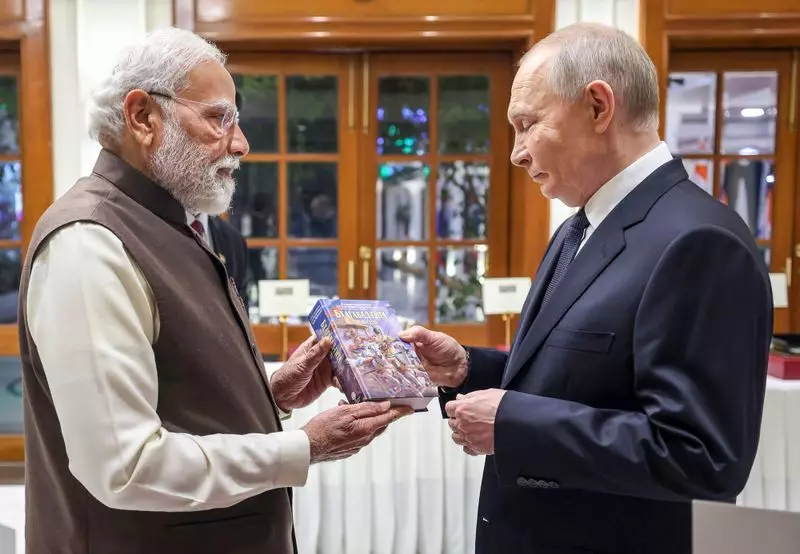
The recent visit of Russian President Vladimir Putin to India has served as a powerful testament to the evolving dynamics of global geopolitics. It underscores India's growing stature as a key player in a world that is steadily moving away from a unipolar structure dominated by a single superpower. This high-profile diplomatic engagement was not merely a routine bilateral meeting but a significant event highlighting the strategic autonomy and calculated foreign policy choices of the Indian government under Prime Minister Narendra Modi.
A Strategic Partnership in a Changing World
The relationship between India and Russia is a time-tested one, forged in the crucible of the Cold War and sustained through decades of geopolitical turbulence. While the international landscape has transformed dramatically, the core of this partnership remains robust. President Putin's visit, coming at a time of heightened global tensions, reaffirmed the mutual commitment to this special and privileged strategic partnership. The discussions covered a wide spectrum of issues, from defense and energy cooperation to trade and regional security.
Critically, the visit demonstrated India's ability to maintain strong, independent relationships with major powers that are often at odds with each other. While deepening its ties with the United States and its allies through groupings like the Quad, India has simultaneously nurtured its historic bond with Russia. This balancing act is a cornerstone of India's foreign policy, allowing it to safeguard its national interests without becoming subservient to any single bloc. The signing of key agreements during the visit, particularly in the domains of defense procurement and energy security, provided concrete substance to the diplomatic rhetoric.
India's Calculated Diplomacy and Strategic Autonomy
India's approach has often been described as "multi-alignment"—a pragmatic strategy of engaging with various power centers based on specific interests. The warmth displayed during the Putin-Modi talks is a clear example of this doctrine in action. New Delhi has consistently refused to join Western-led sanctions against Moscow following the Ukraine conflict, prioritizing instead its own energy needs, defense preparedness, and long-standing diplomatic equity. This stance, while drawing criticism from some quarters, is rooted in a clear-eyed assessment of India's strategic imperatives.
The visit also sent a clear message about the limitations of a unipolar world order. It highlighted that nations like India, with significant economic clout, demographic heft, and military capability, are no longer willing to be passive followers in a system designed by others. They are actively shaping alternative frameworks and partnerships that reflect a more multipolar distribution of power. Russia's outreach to India, and India's reciprocation, is a building block in this emerging architecture, where alliances are more fluid and issue-based rather than rigid and ideological.
Implications for Global Geopolitics and the Future
The implications of this reinforced partnership are profound for the international system. First, it solidifies a major axis of cooperation that exists outside the traditional Western alliances. Second, it provides India with crucial leverage and options, whether in securing affordable energy resources or accessing advanced military technology. For Russia, the partnership with a rising India offers a vital economic and diplomatic lifeline amid its isolation from the West.
Looking ahead, the challenge for Indian diplomacy will be to continue navigating this complex terrain without triggering irreparable fissures in its other important relationships. The goal is not to choose sides but to advance India's development and security goals through a network of relationships. The success of President Putin's visit proves that this path, though delicate, is viable. It reinforces India's position as an indispensable nation whose choices will significantly influence the character of the 21st-century world order.
In conclusion, the high-profile visit was far more than a photo opportunity. It was a strategic event that illuminated the contours of a new global reality. As the world transitions to a multipolar model, India, through engagements like these, is confidently asserting its role as a leading pole—a nation that shapes outcomes rather than merely reacting to them. The enduring India-Russia partnership, refreshed and recalibrated for contemporary challenges, stands as a key pillar in this ongoing global rebalancing.