

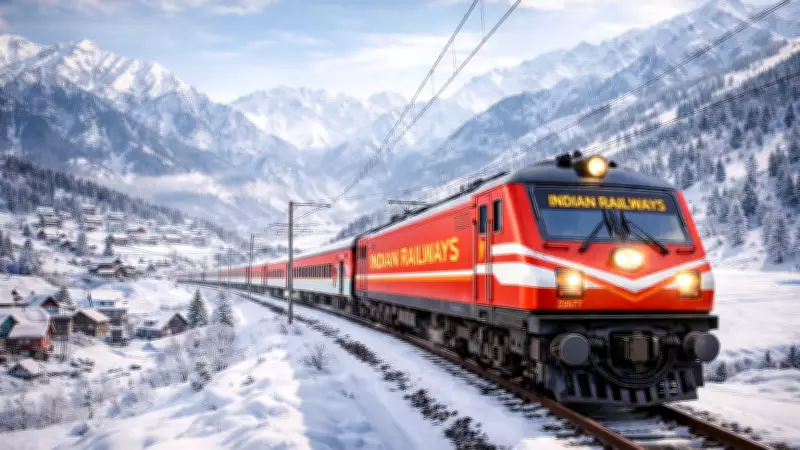
Railways Advance Major Kashmir Rail Expansion with 158 km New Line DPR
The Ministry of Railways has taken a significant step toward bolstering train connectivity in the strategically important Kashmir Valley by preparing a Detailed Project Report (DPR) for 158 kilometers of new railway lines. This initiative is specifically designed to improve transportation infrastructure in the border region, addressing both economic and strategic needs.
New Railway Corridors and Dropped Projects
Railway Minister Ashwini Vaishnaw, in a recent statement to the Rajya Sabha, outlined the specifics of the new rail lines covered by the DPR. These include the Qazigund–Srinagar–Budgam doubling project, spanning 118 km, and the Baramulla–Uri new line, covering 40 km. The minister emphasized that sanctioning these projects involves a dynamic process requiring consultation with various stakeholders, including the State Government, and necessary approvals from bodies like NITI Aayog and the Ministry of Finance. As such, exact timelines for implementation cannot be fixed at this stage.
In contrast, the Railways have decided to drop several previously proposed projects due to feasibility concerns. Notably, a 34-km new line between Sopore and Baramulla, for which a DPR was prepared, has been abandoned. Similarly, a survey for the Avantipore (Kakapora) to Shopian new line (28 km) in Pulwama district was completed but deemed infeasible, leading to its cancellation. These decisions highlight the ministry's focus on prioritizing viable and impactful infrastructure developments.

Context of the USBRL Project and Regional Impact
This new initiative builds upon the recent commissioning of the Udhampur-Srinagar-Baramulla Rail Link (USBRL) project last year, a 272-km national project that spans multiple districts in Jammu and Kashmir, including Udhampur, Reasi, Ramban, Srinagar, Anantnag, Pulwama, Budgam, and Baramulla. The USBRL project has already made substantial socio-economic contributions to the region, generating over 5 crore man-days of employment and enhancing local connectivity.
The preparation of the DPR for the new 158 km lines signifies a continued commitment to expanding rail networks in Kashmir, aiming to further integrate the region and support its development. By improving train connectivity, the Railways seek to facilitate easier movement of goods and people, potentially boosting tourism and trade in the valley.
Strategic Importance and Future Steps
The focus on Kashmir's railway infrastructure underscores its strategic importance as a border region. Enhanced connectivity can aid in logistical support and economic stability, aligning with broader national goals. However, the process from DPR preparation to project sanction is complex, involving multiple layers of approval and stakeholder engagement.
As the Ministry of Railways moves forward, the emphasis remains on ensuring that new projects are both feasible and beneficial, learning from past assessments that led to the dropping of infeasible lines. This cautious yet progressive approach aims to maximize the impact of railway expansions in Jammu and Kashmir, contributing to long-term regional growth and connectivity.






