

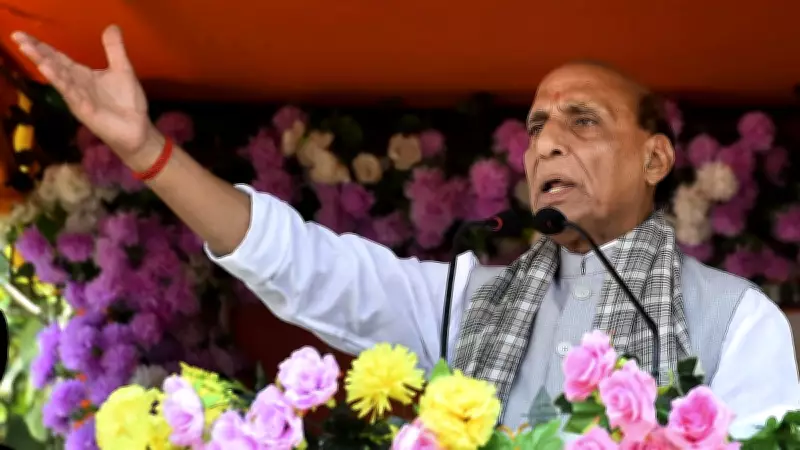
Rajnath Singh Draws Parallel Between COVID-19 Management and West Asia Crisis Response
Defence Minister Rajnath Singh has declared that India's robust handling of the COVID-19 pandemic serves as a valuable model for confronting the escalating crisis in West Asia. Speaking at a recent event, Singh emphasized that the nation's demonstrated resilience and strategic coordination during the health emergency can be effectively applied to geopolitical challenges in the volatile region.
Strategic Preparedness and National Unity Highlighted
Singh underscored that the government's multi-faceted approach to the pandemic—encompassing swift policy implementation, resource mobilization, and public cooperation—showcases India's capacity to manage complex emergencies. He noted that similar principles of preparedness, adaptability, and unity are crucial in addressing the tensions in West Asia, which involve conflicts and diplomatic strains affecting global stability.
Key elements from India's COVID-19 response cited by Singh include:

- Rapid deployment of resources to mitigate immediate threats.
- Collaborative efforts between central and state authorities.
- Public awareness campaigns to foster collective responsibility.
Implications for India's Foreign Policy and Defence
The Defence Minister's remarks signal a proactive stance in India's foreign policy, suggesting that lessons from domestic crises can inform international engagements. He highlighted that India's experience in managing large-scale disruptions has bolstered its defence mechanisms and diplomatic agility, positioning the country to contribute to peace and stability in West Asia.
Singh further elaborated that the government's focus on self-reliance and strategic autonomy, as seen during the pandemic, aligns with efforts to navigate the complexities of the West Asia crisis. This includes safeguarding national interests while engaging in multilateral dialogues to de-escalate tensions.
Broader Context of Geopolitical Tensions
The West Asia crisis, involving conflicts in areas such as the Middle East, has significant implications for global security and economic stability. Singh's comments come amid ongoing efforts by India to balance its diplomatic relations and ensure the safety of its citizens in the region. By referencing the COVID-19 response, he aims to instill confidence in India's ability to handle external threats with the same diligence applied to internal challenges.
In summary, Rajnath Singh's assertion reflects a strategic vision where past successes in crisis management are leveraged to address current geopolitical issues, reinforcing India's role as a resilient and responsible global actor.






