

Rajnath Singh Inaugurates Key DRDO Facility to Enhance Submarine Stealth in Visakhapatnam
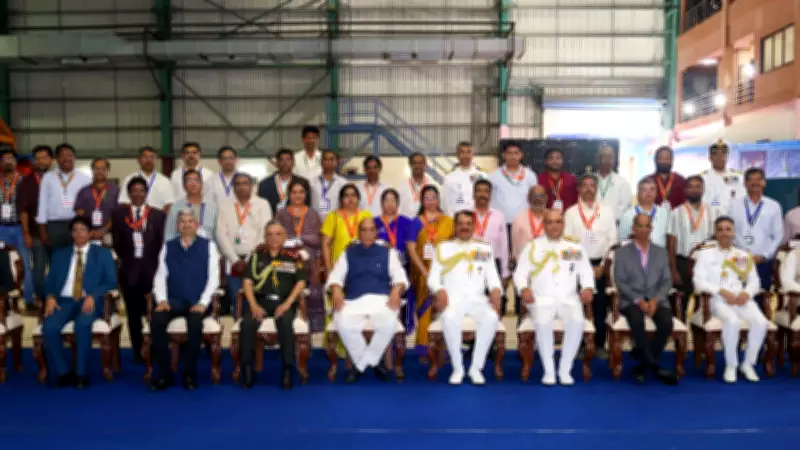
In a significant move to bolster India's naval capabilities, Defence Minister Rajnath Singh laid the foundation stone for the Large Cavitation Tunnel (LCT) facility on Saturday. The event took place at the Naval Science & Technological Laboratory (NSTL), a premier DRDO laboratory located in Visakhapatnam. This initiative is part of a broader effort to increase the stealthy characteristics of indigenously designed submarines, making them more elusive and effective in underwater operations.
Strengthening India's Submarine Fleet and Nuclear Triad
India has been actively strengthening its submarine capabilities through indigenous projects. The recent induction of INS Aridaman into the navy has significantly reinforced India's nuclear triad, which includes land-based missiles and fighter aircraft. Among these systems, submarines are considered the most challenging to track due to their ability to operate deep beneath the ocean's surface.
The Aridaman is classified as a ballistic missile submarine (SSBN) and is designed to launch up to eight nuclear-armed K-4 missiles, capable of striking targets as far as 3,500 kilometers away. It is the third vessel in the Arihant-class series, with plans underway for the more advanced S-5 class of SSBNs to follow.

Expanding Submarine Programs and Procurement Plans
Concurrently, the Indian Navy is committed to developing the Project-77 class of nuclear-powered attack submarines (SSNs) and the Project-76 class of conventional diesel-electric powered submarines (SSKs). The navy is expected to procure at least 22 of these domestically produced submarines, enhancing its underwater fleet's versatility and strength.
The true power of submarines lies in their stealth and surprise attack capabilities. A recent demonstration of this was seen when an American submarine sank the Iranian frigate IRIS Dena off the coast of Sri Lanka last month, highlighting how submarines can operate undetected and execute precise strikes.
Role of the Large Cavitation Tunnel in Noise Reduction
Anti-submarine warfare relies heavily on acoustic detection, with propeller noise being a key indicator. Countries maintain extensive threat libraries of propeller sounds to identify and track submarines. The new LCT facility will enable DRDO to test and refine submarine designs in-house, reducing noise levels without relying on foreign facilities that could compromise data security.
During the foundation stone ceremony, Rajnath Singh emphasized the facility's importance, stating, "This facility is not merely an infrastructure project, but an enabling system, which will strengthen our capabilities in advancing propulsion systems, enable focused efforts on noise reduction and further strengthen stealth capabilities. It will serve as a foundational backbone for the design and development of submarines & ships, supporting future advancements in naval engineering and maritime defence systems."
Enhancing Naval Research and Development
The LCT will allow DRDO to conduct critical simulations for both submarine and surface vessel studies in an integrated setup. This will significantly improve India's shipbuilding research by validating hydrodynamic designs and propulsion systems. As a result, Indian-designed submarines will become more discreet, enhancing their ability to patrol silently and deter adversaries.
This facility marks a pivotal step in India's journey towards self-reliance in defence technology, ensuring that future naval assets are equipped with cutting-edge stealth features to safeguard national security.






