

Senate Hearing Erupts in Debate Over U.S. Action in Venezuela
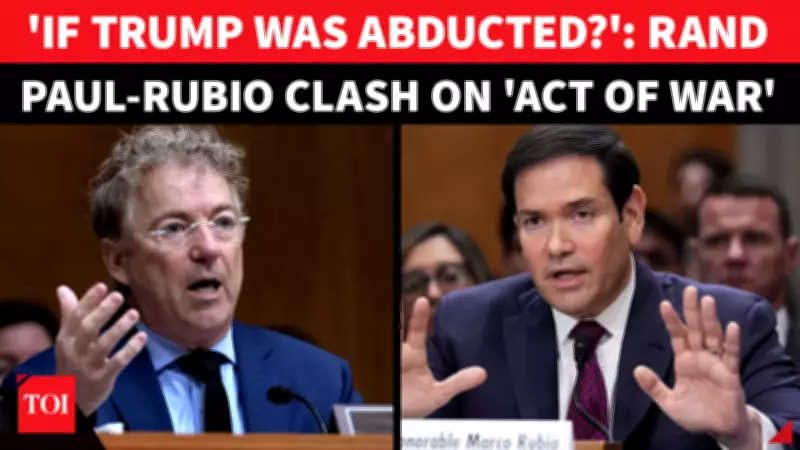
In a tense exchange at the Senate Foreign Relations Committee hearing, Senator Rand Paul directly confronted Secretary of State Marco Rubio regarding the Trump administration's handling of the capture of Venezuelan leader Nicolás Maduro. The discussion centered on whether this operation should be classified as a standard law enforcement activity or a more significant act of war.
Paul Challenges Administration's Stance on Maduro Capture
Senator Rand Paul, known for his libertarian views, strongly disputed the administration's characterization of the Maduro capture as merely a law enforcement operation. He argued that such actions blur the lines between domestic policing and international military intervention, raising concerns about the expansion of executive power and the legal boundaries of U.S. engagement abroad.
Paul emphasized that labeling the capture as non-military could set a dangerous precedent, potentially allowing future administrations to bypass congressional oversight in foreign conflicts. His critique reflects his long-standing opposition to U.S. intervention in Venezuela, a position rooted in principles of non-interventionism and skepticism toward foreign entanglements.

Rubio Defends Trump Administration's Position
In response, Secretary of State Marco Rubio defended the Trump administration's stance, asserting that the operation was conducted within the framework of international law and aimed at upholding justice rather than initiating warfare. Rubio acknowledged Paul's consistent libertarian perspective but maintained that the administration's approach was necessary to address the ongoing crisis in Venezuela.
Rubio highlighted the complexities of foreign policy, where actions must balance legal justifications with strategic objectives. He argued that the capture was a targeted effort to hold Maduro accountable for alleged crimes, without escalating into a broader military conflict that could destabilize the region further.
Broader Implications for U.S. Foreign Policy
This clash between Paul and Rubio underscores a growing debate in Washington over several critical issues:
- Executive Power: The extent to which the president can authorize foreign operations without congressional approval.
- Foreign Intervention: The ethical and legal limits of U.S. involvement in other nations' affairs, particularly in volatile regions like Latin America.
- Legal Frameworks: How international and domestic laws apply to actions such as the capture of foreign leaders, and whether they constitute acts of war or law enforcement.
The hearing has sparked discussions among policymakers and analysts about the future direction of U.S. foreign policy, especially regarding Venezuela. As tensions persist, the debate between interventionist and non-interventionist approaches continues to shape Washington's strategies in addressing global challenges.
This incident highlights the ongoing friction within the U.S. government over how to navigate complex international situations while adhering to constitutional and legal standards. The outcome of such debates could influence not only Venezuela but also U.S. actions in other conflict zones worldwide.






