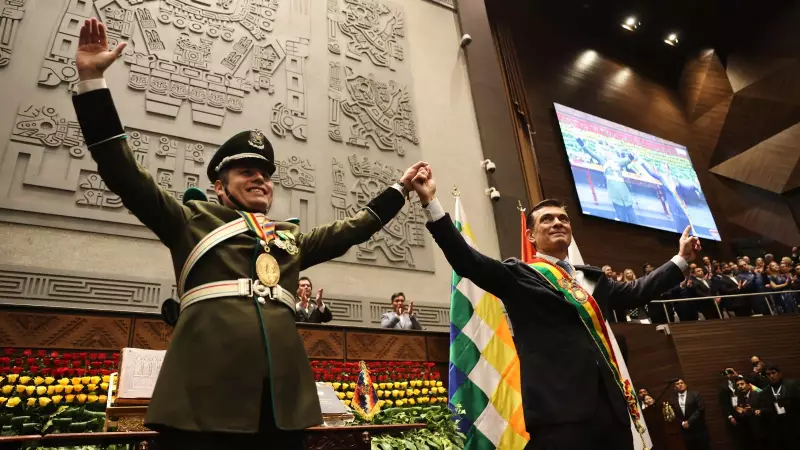
In a historic political transformation that has captured global attention, Bolivia has witnessed a dramatic shift in power after two decades of continuous rule by the same political party. The South American nation has sworn in Rodrigo Paz as its new president, marking the end of an era dominated by the Movement for Socialism (MAS) party.
A New Chapter in Bolivian Politics
The political landscape of Bolivia underwent a seismic change when Rodrigo Paz was officially sworn in as the country's new president on November 4, 2024. This significant event took place at the Palacio Quemado, the presidential palace in La Paz, where Paz took the oath of office before a gathered audience of dignitaries, political supporters, and international observers.
The ceremony represented more than just a routine transfer of power—it symbolized the conclusion of twenty consecutive years of governance by the MAS party, which had maintained control since the initial election of Evo Morales in 2006. The transition comes after months of political tension and uncertainty that had gripped the nation.

The Road to Presidential Transition
The path to this historic transition began with growing political instability under the previous administration. President Luis Arce, who represented the MAS party, had been facing increasing pressure from various sectors of Bolivian society. The political climate reached a critical point when military leadership publicly withdrew support from Arce's government, creating a constitutional crisis that demanded resolution.
Rodrigo Paz's ascent to the presidency follows his established political career and reputation as a respected economist. Before assuming the nation's highest office, Paz had served as the mayor of La Paz, Bolivia's administrative capital, where he earned recognition for his administrative capabilities and economic expertise. His background in economics is particularly significant given Bolivia's current economic challenges.
The transition process involved complex political negotiations and constitutional procedures. According to Bolivian political protocol, the position fell to Paz in his capacity as the President of the Chamber of Deputies, demonstrating that the transfer of power followed established constitutional guidelines despite the unusual circumstances.
Implications for Bolivia's Future
This political transformation carries profound implications for Bolivia's domestic policies and international relationships. The change in leadership potentially signals a shift in how Bolivia will approach key issues including economic management, social programs, and international diplomacy.
The new administration faces immediate challenges, including addressing economic stability, managing natural resource policies (particularly regarding lithium reserves that have attracted global interest), and healing political divisions within the country. Paz's economic background suggests that financial matters will receive priority attention as he begins his term.
Internationally, this development represents a significant moment in South American politics, where several countries have experienced political oscillations between left-wing and center-right governments in recent years. Neighboring nations and international partners will be closely monitoring how Bolivia's foreign policy evolves under the new leadership.
As Bolivia enters this new political era, the world watches to see how Rodrigo Paz will navigate the complex challenges ahead and whether his leadership will bring the stability and prosperity that Bolivian citizens have been seeking. The peaceful transfer of power, despite the preceding tensions, offers hope for democratic consolidation in the region.