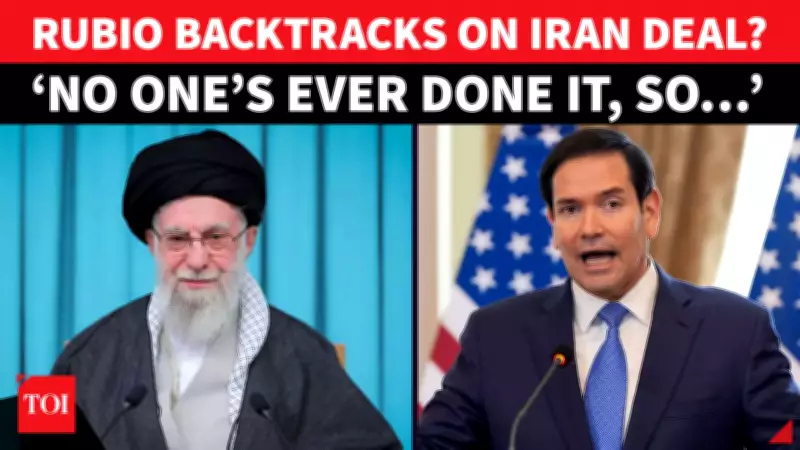
Rubio Acknowledges Historic Challenge in Iran Nuclear Negotiations
U.S. Secretary of State Marco Rubio has made a significant admission regarding diplomatic efforts with Iran, stating that no successful nuclear deal has ever been secured with the country's Supreme Leader Ayatollah Ali Khamenei. This revelation comes as the Trump administration prepares for crucial nuclear talks while simultaneously increasing military presence in the Middle East region.
Diplomatic Efforts Amid Military Buildup
Speaking on Sunday, Secretary Rubio emphasized that the administration continues to pursue diplomatic channels with Iran despite what he described as defensive military preparations. The United States maintains its preference for a diplomatic solution to nuclear concerns, Rubio stated, while acknowledging the administration's readiness for alternative outcomes should negotiations fail.
This dual approach of diplomacy backed by military preparedness represents a complex strategy as tensions continue to simmer across the Middle East. The administration's position reflects both continued engagement with Iran and contingency planning for potential escalation.

Historical Context of Iran Negotiations
Rubio's admission about the difficulty of securing agreements with Khamenei highlights the persistent challenges that multiple U.S. administrations have faced when dealing with Iranian leadership. Historical attempts at nuclear agreements have encountered numerous obstacles, from verification issues to regional security concerns.
The Secretary's comments raise important questions about:
- The realistic prospects for successful nuclear negotiations
- Whether this represents strategic realism or a policy shift
- How military preparations might influence diplomatic efforts
- The future of existing nuclear agreements with Iran
Regional Implications and Global Concerns
As the United States positions additional military assets in the region, international observers are closely monitoring how this might affect diplomatic dynamics. The balance between demonstrating defensive capability and maintaining negotiation credibility presents a delicate challenge for U.S. foreign policy.
Regional stability hangs in the balance as these developments unfold, with neighboring countries and global powers watching for signals about the direction of U.S.-Iran relations. The nuclear question remains central to Middle East security concerns and has implications for non-proliferation efforts worldwide.
Secretary Rubio's remarks provide insight into the administration's current thinking while acknowledging the historical difficulty of reaching sustainable agreements with Iranian leadership. As preparations continue for upcoming talks, the international community awaits to see whether diplomatic breakthroughs can overcome decades of negotiation challenges.