

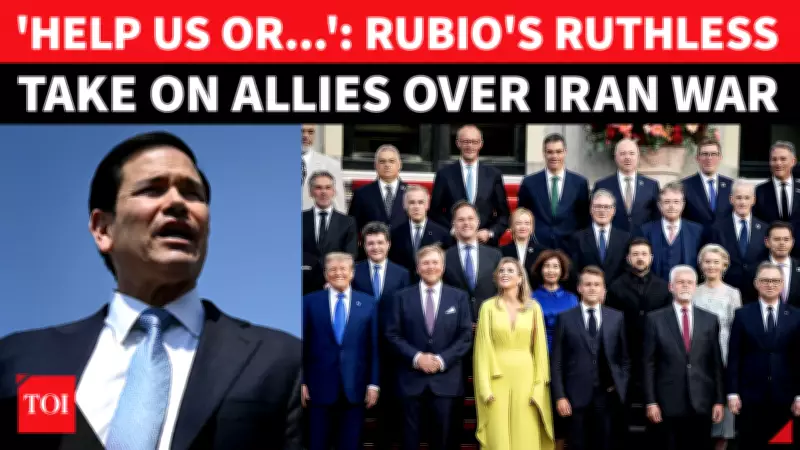
Rubio Issues Stern Warning to NATO Allies Over Hormuz Crisis
US Secretary of State Marco Rubio has sharply criticized NATO allies, demanding greater support to address the escalating blockade of the Strait of Hormuz by Iran. In a forceful statement, Rubio pushed back against European leaders who have characterized the conflict as "not Europe's war," drawing a direct parallel to the ongoing crisis in Ukraine where the United States has been the primary provider of military and financial aid.
Growing US Frustration Over Allied Burden-Sharing
Rubio's remarks underscore a deepening frustration within the US administration regarding what he perceives as an imbalance in global security responsibilities. He accused NATO partners of failing to step up when Washington requires backing, particularly as tensions in the Middle East threaten to disrupt critical global energy routes and regional stability. The Secretary of State emphasized that the United States cannot shoulder the burden alone, calling for a unified response to counter Iran's actions in the strategic waterway.
Comparison to Ukraine Conflict Highlights Disparities
By comparing the Hormuz situation to the war in Ukraine, Rubio highlighted the disparity in allied contributions. He pointed out that while the US has committed extensive resources to support Ukraine against Russian aggression, European nations have been reluctant to engage similarly in the Middle East. This comparison aims to pressure NATO members into increasing their involvement, framing the Hormuz blockade as a collective security issue that demands a coordinated international effort.

Implications for Global Energy Security
The Strait of Hormuz is a vital chokepoint for global oil shipments, with approximately 20% of the world's oil supply passing through it daily. Iran's blockade poses significant risks to energy markets and economic stability worldwide. Rubio's call to action signals that the US views this as a pressing threat that requires immediate and robust allied cooperation to ensure the free flow of commerce and prevent further escalation in the region.
NATO's Response and Future Diplomacy
As tensions rise, NATO faces increasing pressure to formulate a cohesive strategy. Rubio's comments may strain transatlantic relations, but they also serve as a catalyst for discussions on burden-sharing and collective defense mechanisms. The situation demands diplomatic engagement to de-escalate the crisis while preparing for potential military contingencies, with the US urging allies to contribute more substantially to regional security efforts.






