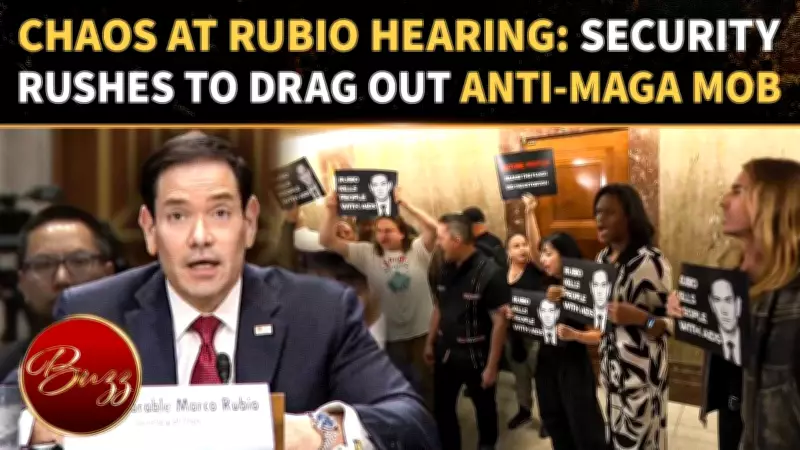
U.S. Secretary of State Marco Rubio's congressional hearing descended into chaos on Tuesday after protesters were forcibly removed while shouting accusations over war policies, humanitarian crises, and AIDS-related deaths. The demonstrators interrupted Rubio's testimony with chants including 'Rubio lies. People with AIDS die' and claims about civilian casualties, prompting security to intervene and drag them out of the chamber.
Hearing Disrupted by Vocal Protesters
The dramatic confrontation unfolded as Rubio faced lawmakers to defend the Trump administration's foreign policy agenda. Protesters voiced anger over ongoing tensions involving Iran and Cuba, as well as broader U.S. military involvement abroad. The disruptions highlighted growing public frustration with international conflicts and diplomatic decisions that critics say have exacerbated humanitarian crises.
Security Intervenes Amid Chants
Security personnel quickly moved to remove the protesters as they shouted slogans and held up signs. Despite the commotion, Rubio continued his testimony, reiterating the administration's stance on key foreign policy issues. The hearing was part of a series of high-stakes appearances on Capitol Hill, where Rubio has faced intense scrutiny over the direction of U.S. diplomacy.

Broader Context of Public Frustration
The incident underscores deep divisions over U.S. foreign policy, particularly regarding military interventions and diplomatic strategies. Critics argue that the administration's approach has led to increased civilian casualties and undermined global stability. Supporters, however, maintain that the policies are necessary to protect national interests.
Rubio Defends Administration's Approach
Despite the disruptions, Rubio remained steadfast in defending the administration's record. He emphasized the need for a strong U.S. presence in global affairs and dismissed the protesters' claims as misinformed. The hearing continued with lawmakers questioning Rubio on a range of issues, including the Iran nuclear deal and relations with Cuba.
The dramatic scenes at the hearing reflect a broader trend of public unrest over U.S. foreign policy, as citizens increasingly voice their concerns through protests and direct action. The incident is likely to fuel further debate as the administration faces ongoing challenges on the international stage.