

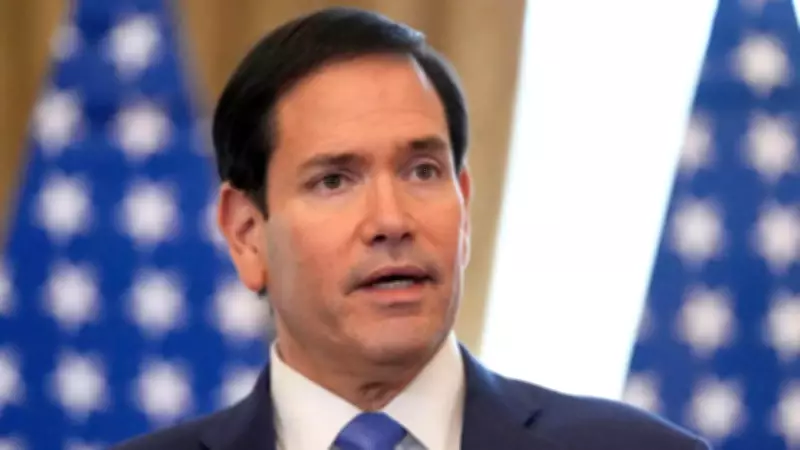
Rubio Criticizes NATO Allies Over Uneven Global Security Burden Sharing
US Secretary of State Marco Rubio on Friday renewed his sharp criticism of NATO allies, specifically calling out European leaders who have described the conflict in the Strait of Hormuz as "not Europe's war." In a pointed statement, Rubio highlighted growing American frustration with what Washington perceives as lopsided allied engagement in international crises with worldwide ramifications.
"Ukraine Isn't Our War" Remark Sparks Debate
"Well, Ukraine isn't our war, yet we've contributed more to that fight than anyone," Rubio declared, underscoring the apparent disparity in security commitments. This comment has triggered renewed discussion about historical security assurances under the Budapest Memorandum on Security Assurances, signed in December 1994.
Under this agreement, the United States, United Kingdom, and Russia pledged to respect Ukraine's sovereignty after Kyiv relinquished what was then the world's third-largest nuclear arsenal. However, the memorandum provided assurances rather than binding military obligations and did not mandate intervention if Ukraine's borders were violated.

Disproportionate Burden on United States
Rubio emphasized that the United States has shouldered a disproportionate share of global security responsibilities while its partners have shown reluctance to step forward when Washington needed support. "The U.S. is constantly asked to help in wars, and we have," Rubio stated. "But when we had a need, we didn't get positive responses from NATO."
The secretary's remarks come amid increasing calls for European and Asian allies to assist in securing the Strait of Hormuz, a crucial maritime chokepoint through which nearly one-fifth of the world's oil and gas supplies transit. Iranian restrictions on shipping in this strategic waterway have disrupted international trade and contributed to higher global energy prices.
Strait of Hormuz: A Global Concern
"Well, it's in their interests to help," Rubio asserted on Thursday just before departing for France to attend a meeting of top diplomats from the G7 nations. "Very little of our energy comes through the Strait of Hormuz. It's the world that has a great interest in that, so they should step up and deal with it."
This statement reinforces Washington's position that allies should assume greater responsibility for securing vital global trade routes, particularly those that minimally impact American energy supplies but significantly affect other nations' economies.
Broader Implications for International Security Cooperation
The secretary's comments reflect deeper tensions within the NATO alliance regarding burden-sharing and collective security responsibilities. As global challenges multiply, from regional conflicts to energy security threats, Rubio's criticism signals potential shifts in how the United States approaches international security partnerships moving forward.
The ongoing discussions highlight fundamental questions about equitable distribution of security responsibilities among allied nations and how collective action mechanisms should function when vital international interests are at stake across different regions of the world.






