

US Secretary Rubio Raises Possibility of Preemptive Military Action Against Iran
In a significant development highlighting escalating tensions in West Asia, US Secretary of State Marco Rubio has declared that preemptive military action against Iran remains a viable option for the United States. Rubio made these remarks during a Senate Foreign Relations Committee hearing, emphasizing the need to protect American personnel stationed across the region.
Assessing Iran's Weakened Leadership and Military Capabilities
Rubio argued that Tehran's current leadership is substantially weaker than it has been in decades, creating a precarious situation. He specifically addressed the potential collapse of Supreme Leader Ali Khamenei and the existing regime, stating, "I don't think anyone can give you a simple answer as to what happens next in Iran if the Supreme Leader and the regime were to fall." However, he expressed hope that elements within Iran's systems could facilitate a transition.
Despite acknowledging Iran's political fragility, Rubio issued a stark warning about its military arsenal. He noted that Iran has accumulated "thousands and thousands" of long-range ballistic missiles, even as its economy faces collapse. This buildup, according to Rubio, presents a direct threat to US interests and allies in the region.

US Military Posture and Regional Implications
The Secretary defended the Trump administration's decision to bolster US military assets in West Asia, including the deployment of the USS Abraham Lincoln strike group. He described this move as "prudent" and "wise", aimed at safeguarding over 30,000 US service members.
"I think it's wise and prudent to have a force posture within the region that could respond and potentially, if necessary, preemptively prevent an attack against thousands of American servicemen and other facilities in the region," Rubio told senators. He added, "I hope it doesn't come to that, but that's what you're seeing now—the ability to posture assets to defend against what could be an Iranian threat."
This military reinforcement comes as regional allies like the United Arab Emirates and Saudi Arabia prepare for potential US-authorized strikes against Iran. The tensions follow Tehran's crackdown on anti-regime protests and concerns about retaliatory actions.
Historical Context: Khamenei's Rule and Recent Challenges
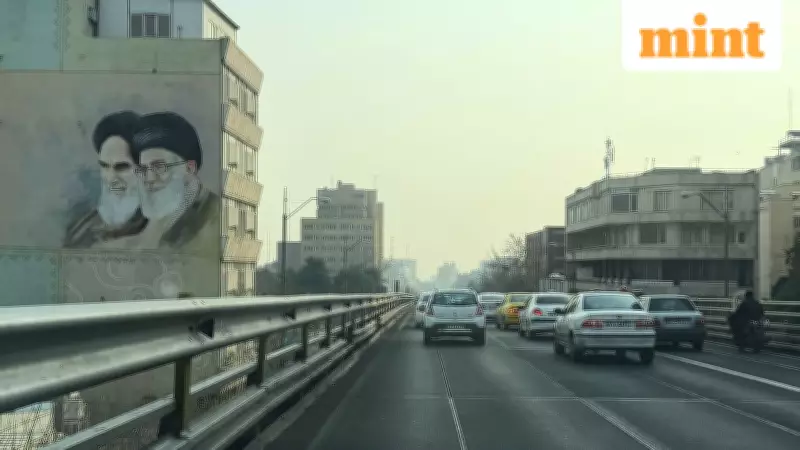
Supreme Leader Ali Khamenei, 86, has governed Iran for more than three decades, assuming power in 1989 after Ayatollah Ruhollah Khomeini's death. His tenure has survived numerous challenges:
- Student protests in 1999
- Mass demonstrations following the disputed 2009 presidential election
- The 2019 unrest that was violently suppressed
- The 2022–2023 "Woman, Life, Freedom" uprising sparked by Mahsa Amini's death
During the recent 12-day conflict with Israel, Khamenei was forced into hiding after Israeli airstrikes killed senior Iranian security officials, revealing significant intelligence vulnerabilities. Despite this, he reemerged last Friday to deliver a defiant address, dismissing protesters as "vandals" allegedly backed by the US and Israel.
Trump's Stance and Warning Escalation
President Donald Trump has publicly supported Iranian protesters while warning Tehran's leadership that violence against demonstrators would trigger military consequences. Although thousands were reportedly killed during recent crackdowns, Trump has yet to announce concrete assistance for protesters.
Early Wednesday, Trump renewed his warning, stating any future US action would be "far worse" than last summer's strikes on Iran's nuclear facilities. This rhetoric underscores the growing possibility of military confrontation as the US continues to strengthen its regional presence and Iran maintains its missile capabilities amid domestic unrest.






