

Russia Accuses US of Coercive Tactics to Block India's Cheap Oil Imports
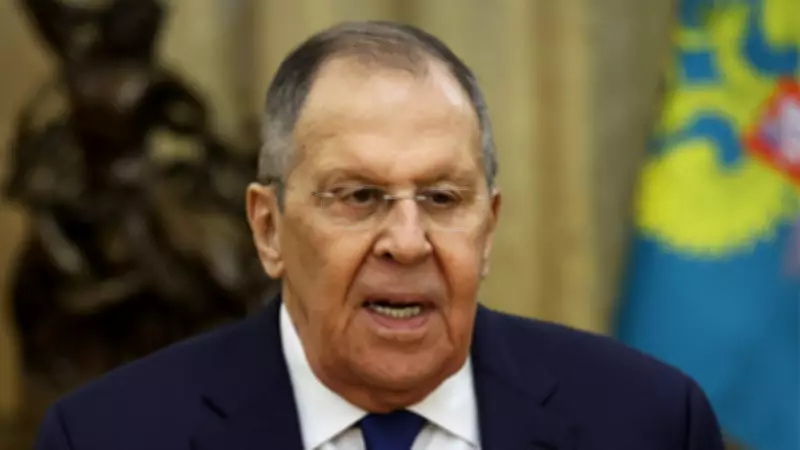
In a sharp diplomatic rebuke, Russian Foreign Minister Sergei Lavrov has publicly accused the United States of employing coercive and restrictive measures aimed at preventing India and other nations from purchasing affordable Russian oil. Lavrov characterized Washington's policies as a deliberate strategy to achieve global economic domination by forcing countries to abandon cheaper energy resources in favor of more expensive American supplies.
Allegations of Economic Coercion and Market Control
During an interview with TV BRICS, as reported by Sputnik, Lavrov detailed his allegations. He claimed the United States is actively using sanctions, tariffs, and other prohibitive tools to pressure nations into severing energy ties with Russia. "They are trying to ban India and our other partners from buying cheap, affordable Russian energy resources," Lavrov stated, "and are forcing them to buy US LNG at exorbitant prices."
Lavrov further argued that these actions violate international norms, citing a "war" against tankers in the open sea that he says contravenes the UN Convention on the Law of the Sea. He described the American approach as fundamentally incompatible with principles of fair competition, framing it as part of a broader US goal to control global energy markets and supply routes.

Context of US-India Relations and Energy Security
These remarks arrive amid heightened speculation regarding India's future oil procurement strategies from Russia, following recent developments in US-India trade relations. The issue has been a sensitive point, with several American officials contending that India's purchase of discounted Russian crude indirectly finances Moscow's military operations in Ukraine.
On Monday, Indian Foreign Secretary Vikram Misri reaffirmed that India's energy policy remains firmly guided by national interest, emphasizing the core priorities of "adequate availability, fair pricing and reliability of supply." This stance was echoed by External Affairs Ministry spokesperson Randhir Jaiswal, who reiterated the government's supreme priority: ensuring the energy security of India's 1.4 billion citizens.
"Diversifying our energy sourcing in keeping with objective market conditions and evolving international dynamics is at the core of our strategy," Jaiswal asserted last week, underscoring that all decisions are made with this strategic imperative in mind.
Recent Trade Developments and Diplomatic Nuances
The diplomatic friction occurs against the backdrop of recent US trade policy adjustments. US President Donald Trump recently signed an executive order removing an additional 25% tariff that had been imposed on Indian goods—a penalty linked to New Delhi's purchases of Russian crude. This decision followed the announcement of a bilateral trade deal, which reduced tariffs on Indian goods from 50% to 18%.
India has neither officially confirmed nor denied reports suggesting a potential reduction or halt in Russian crude imports following this tariff rollback. Lavrov, in his interview, expressed frustration with the current state of affairs, contrasting it with earlier diplomatic engagements. "By accepting their proposal, we seem to have completed the task of resolving the Ukrainian issue and moving on to a full-scale, broad-based and mutually beneficial cooperation. So far, the reality is quite the opposite," he lamented, pointing to the imposition of new sanctions as evidence of continued obstacles.
Broader Geopolitical Implications
Lavrov positioned Russia's response within a wider geopolitical framework, stating that Russia, like India, China, Indonesia, and Brazil, remains open to cooperation with all countries, including major powers such as the United States. However, he accused the US of "creating artificial obstacles" that hinder such collaborative efforts.
The ongoing dispute highlights the complex interplay between energy security, economic policy, and international diplomacy. As global energy dynamics continue to evolve, the positions of key players like India—balancing affordable resource acquisition with diplomatic relationships—will remain critically important to watch in the coming months.






