

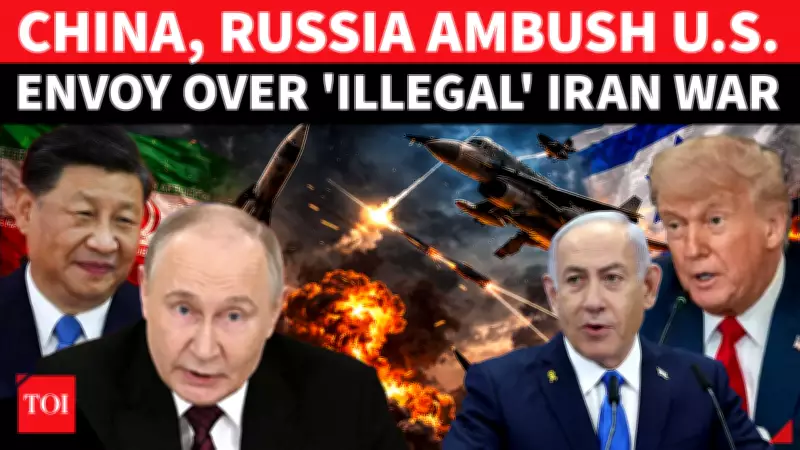
Russia and China Unite at UN to Defend Iran Against US-Israel Military Strikes
In a dramatic confrontation at the United Nations Security Council, Russia and China have launched a coordinated diplomatic offensive against the United States and Israel over recent military strikes targeting Iran. The session, held on March 13, 2026, highlighted deepening global divisions as tensions in the Middle East continue to escalate.
Accusations of Escalation and Diplomatic Failure
Russia's UN Ambassador, Vasily Nebenzia, delivered a scathing critique of Washington and its allies, accusing them of deliberately inflaming regional tensions and systematically rejecting diplomatic avenues for conflict resolution. "Where are Iranian nukes, you liars?" was among the pointed rhetorical questions posed, challenging the justification for military actions. Nebenzia argued that the strikes represent a dangerous provocation that undermines international stability.
Echoing these concerns, China's Ambassador Fu Cong called for immediate restraint from all parties involved. He issued a stark warning that the crisis could rapidly spread beyond Iran's borders, potentially engulfing the entire Middle East in a wider conflict if hostilities are not de-escalated promptly. Fu emphasized the urgent need for dialogue over military posturing.

US Rebuttal and Accusations of Protectionism
The United States firmly rejected the criticisms from Moscow and Beijing. American representatives countered by accusing Russia and China of actively shielding Tehran from accountability for its actions in the region. The US stance highlighted Iran's alleged destabilizing activities and argued that the military strikes were necessary defensive measures.
This exchange has exposed a significant rift within the UN Security Council, with the five permanent members deeply divided on how to address the growing Iran conflict. The debate underscores the challenges of achieving consensus on international security matters amid competing geopolitical interests.
Broader Context of Regional Instability
The UN confrontation occurs against a backdrop of heightened military activity and threatening rhetoric from various actors in the Middle East. Recent developments include:
- Iran's Quds Force vowing "non-stop" attacks against US and Israeli targets
- New Iranian leadership making concerning pledges regarding the strategic Strait of Hormuz
- Multiple attacks on regional infrastructure, including high-rise buildings in Dubai and Bahrain
- Increased rocket barrages from Hezbollah targeting Israeli defenses
These events have created what many analysts describe as the most volatile security environment in the region in decades, with the potential for miscalculation leading to broader conflict.
Implications for Global Diplomacy
The Security Council session reveals how the Iran conflict has become a flashpoint in great power competition. The alignment of Russia and China against the US-Israel position suggests a coordinated effort to challenge Western influence in the Middle East through diplomatic channels. This development complicates international efforts to mediate the crisis and establish a sustainable peace framework.
As the situation continues to evolve, the international community watches anxiously to see whether diplomatic engagement can prevail over military escalation, or whether the divisions displayed at the UN will further fuel regional hostilities with global consequences.






