

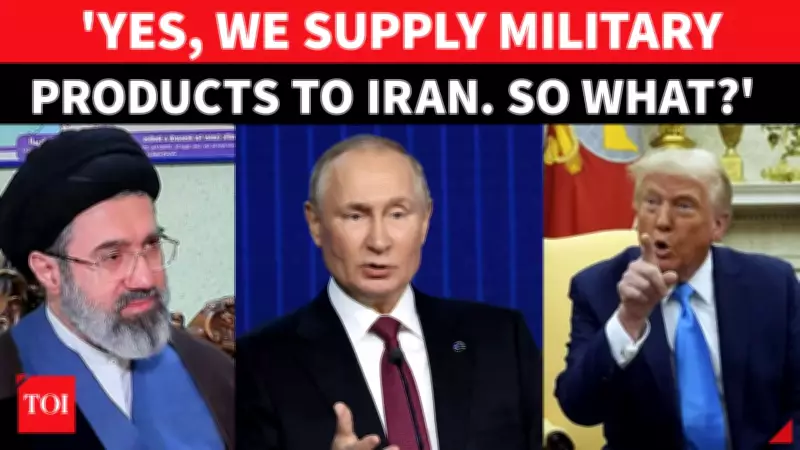
Russia Acknowledges Military Support to Iran Amid Regional Tensions
In a significant development that has captured global attention, Russia's Foreign Minister Sergey Lavrov has publicly confirmed that Moscow is supplying military equipment to Iran under a formal cooperation agreement. This revelation comes amidst escalating tensions in the Middle East and has direct implications for regional security dynamics involving the United States.
Formal Military-Technical Cooperation Agreement
During an interview on France Television, Lavrov explicitly stated that Russia and Iran have established a military-technical cooperation framework. "We have a military-technical cooperation agreement with Iran, and Moscow has supplied Iran with certain types of military products," Lavrov declared. This admission marks a clear affirmation of the strategic partnership between the two nations, which has been a subject of international speculation for years.
However, Lavrov was quick to draw a distinction regarding the nature of this assistance. He firmly rejected allegations that Russia is providing intelligence support to Iran. "But we can't accept the accusations that we're helping Iran with intelligence," he emphasized, addressing concerns that have been raised by Western governments and security analysts.

Public Knowledge of US Military Bases
Perhaps the most striking aspect of Lavrov's comments was his assertion regarding American military installations in the region. Speaking from Moscow, the Foreign Minister claimed that the locations of US bases are widely known. "Everyone knows the coordinates of U.S. military bases in the region. It's public information," Lavrov stated matter-of-factly.
He further commented on Iran's recent military actions, saying, "I'm not surprised that Iran is attacking them." This remark suggests a perception that targeting these facilities is a predictable outcome given their visibility and the ongoing geopolitical conflicts.
Broader Context and Implications
This confirmation from Russia's top diplomat arrives at a time of heightened volatility in the Middle East. The region has witnessed a series of confrontations and proxy conflicts involving Iran, its allies, and US forces along with their partners. Lavrov's statements provide official transparency on one aspect of Russia's foreign policy while simultaneously challenging narratives about clandestine intelligence sharing.
The acknowledgment of arms transfers underscores the deepening military ties between Moscow and Tehran, which could influence the balance of power in the area. Meanwhile, the dismissal of intelligence collaboration claims represents an effort to manage diplomatic fallout and counter specific allegations from adversaries.
As global powers navigate these complex relationships, Lavrov's interview highlights the ongoing strategic calculations and public posturing that define international relations in this turbulent period. The developments continue to be closely monitored by defense experts and policymakers worldwide.






