

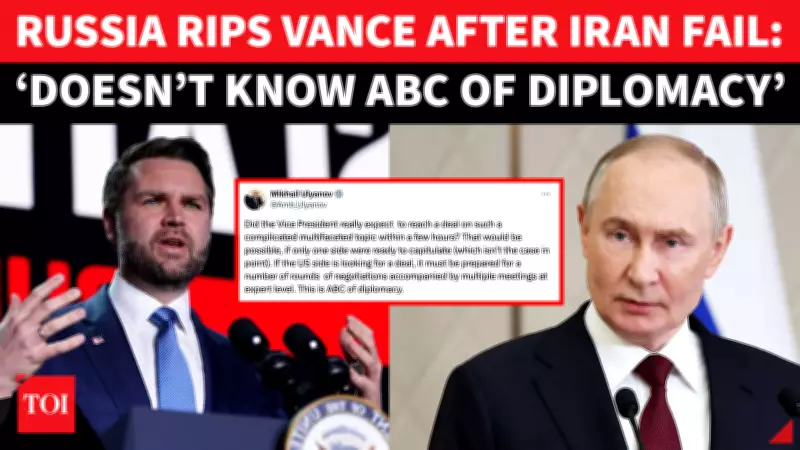
Russia Questions US Strategy After Iran Negotiations Collapse in Islamabad
Russia has publicly criticized the United States' diplomatic approach following the failure of recent talks with Iran in Islamabad. The negotiations, which lasted nearly 21 hours, concluded without any agreement, prompting Moscow to question the realism of American expectations.
Moscow's Diplomatic Pushback
Mikhail Ulyanov, Russia's representative to international organizations in Vienna, expressed skepticism about the US negotiating tactics. He specifically questioned whether JD Vance, the American envoy, genuinely believed a comprehensive deal could be reached within such a short timeframe. "What were you thinking?" Ulyanov reportedly asked, highlighting what Moscow perceives as unrealistic demands from Washington.
The talks in Islamabad were part of ongoing efforts to address tensions surrounding Iran's regional activities and the strategic Strait of Hormuz. Despite extensive discussions, the parties failed to bridge their differences, particularly regarding maritime security and nuclear concerns.

Context of the Failed Negotiations
This diplomatic setback occurs against a backdrop of heightened regional tensions. Recent developments include:
- Iran's warnings about the Strait of Hormuz being "non-negotiable"
- Hezbollah's drone incursions into northern Israel
- US naval deployments to the region
- Continued threats regarding Iran's nuclear facilities
Russia's criticism suggests Moscow believes the US approach lacks strategic patience and understanding of Iran's position. The Kremlin argues that successful diplomacy requires more time and flexibility than what was demonstrated in Islamabad.
Broader Implications
The failed talks have several important consequences:
- They demonstrate the continuing divide between US and Iranian positions
- They highlight Russia's growing role as a diplomatic player in Middle Eastern affairs
- They raise questions about future negotiation strategies
- They contribute to ongoing uncertainty in regional security dynamics
As Vance returned to the United States without an agreement, the episode underscores the challenges of international diplomacy in complex geopolitical environments. Both sides have indicated they remain prepared for various scenarios, suggesting tensions may persist despite the diplomatic effort.






