

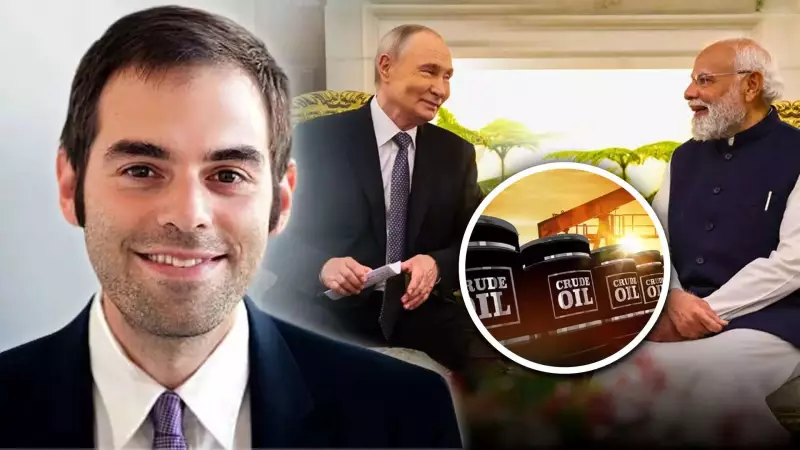
In a significant diplomatic move, Russian President Vladimir Putin returned to India for a summit in December 2025, marking his first visit since the onset of the Ukraine conflict four years prior. This high-level meeting between Prime Minister Narendra Modi and President Putin sent a clear, defiant message to Western capitals: the strategic partnership between India and Russia is designed to withstand external pressure.
The Summit's Defiant Message And Strategic Imperatives
Analyst Michael Kugelman, in his explanation, highlighted the core implication of this summit. It occurred against a backdrop of intense Western urging for India to reduce its substantial imports of Russian energy. Instead of scaling down, the leaders used the platform to broadcast the endurance and importance of their bilateral ties. The meeting underscored India's commitment to a multi-vector diplomacy, skillfully balancing its relationships with major global powers without fully aligning with any single bloc.
Kugelman laid out a crucial strategic payoff for India from this continued partnership: greater access to Central Asia. This resource-rich region, often described as a stage for a new 'Great Game,' is currently dominated by China's influence and infrastructure projects. Pakistan is also actively pushing for deeper inroads. For India, enhanced connectivity to Central Asia promises energy opportunities, alternative trade corridors, and valuable strategic depth.

Russia's Role As A Gateway And The West's Dilemma
Here, Russian support becomes a potential game-changer. With its historical and political leverage in Central Asian republics, Russia could act as a decisive facilitator for India. Moscow's backing could help New Delhi unlock connectivity projects and energy agreements that have been difficult to achieve independently, thereby offering a counterbalance to Chinese dominance in the region.
Meanwhile, the United States finds itself in a complex position. Washington continues to view a strong relationship with India as essential to the global balance of power, particularly as a counterweight to China. This need forces the US to manage its disagreements with New Delhi over the latter's robust ties with Moscow. Kugelman's analysis suggests that the West's attempt to diplomatically and economically isolate Russia has, in this context, met with limited success, as evidenced by the high-profile Modi-Putin summit.
Broader Implications: Energy, Defence, And Trade
The episode also unpacks other critical facets of India's foreign policy challenges. India's significant energy dependence on Russian oil remains a point of contention with the West but a pillar of economic pragmatism for New Delhi. Furthermore, the partnership with Russia has faced hurdles, including delays in defence supplies, which the summit likely aimed to address.
On other fronts, India continues to pursue its trade goals with the European Union while navigating this intricate geopolitical landscape. The convergence of these issues—energy security, defence cooperation, Central Asian access, and managing relations with both the West and Russia—defines a crucial moment in contemporary Asian geopolitics. India's diplomacy is being tested as it seeks to secure its national interests by engaging with all sides in an increasingly polarized world.






