

Russia Proposes Major Energy Supply Increase to India During High-Level Visit
Russia has emphasized its strengthening energy alliance with India, declaring that Moscow stands ready to significantly escalate energy deliveries to the Indian market. This announcement comes as the global energy landscape faces disruption due to ongoing conflicts in the Middle East.
Commitment to Enhanced Oil, LNG, and Fertilizer Exports
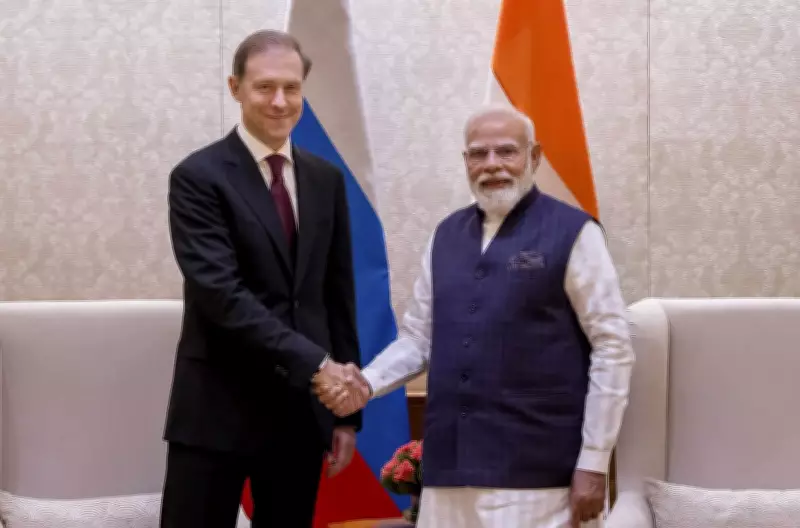
During an official visit to India from April 2 to April 3, Russia's First Deputy Chairman Denis Manturov stated that Russian companies possess the full capability to boost supplies of both crude oil and liquefied natural gas (LNG) to meet India's growing demands. The Russian Embassy in India released a detailed statement confirming this strategic offer.
Manturov highlighted a remarkable achievement, noting that Russia had already increased shipments of vital mineral fertilizers to India by an impressive 40% by the close of 2025. He expressed Moscow's continued readiness to fulfill India's agricultural requirements consistently.

Furthermore, a collaborative project focused on urea (carbamide) production is currently in active development, signaling a deepening of long-term agricultural cooperation between the two nations beyond mere trade.
Nuclear Energy Collaboration Progresses Steadily
The bilateral discussions also reaffirmed the ongoing and robust partnership in the nuclear energy sector. Work on constructing new power units for the Kudankulam Nuclear Power Plant in Tamil Nadu is advancing precisely according to the mutually agreed timelines and schedules.
"Denis Manturov confirmed that Russian companies have the capacity to steadily increase supplies of oil and liquefied natural gas to the Indian market. Russia and India continue to strengthen their partnership in nuclear energy. In line with agreed schedules, the project to construct power units for the Kudankulam Nuclear Power Plant is being implemented," the embassy statement elaborated, as cited by the ANI news agency.
Expansive Strategic Dialogue with Indian Leadership
Manturov, who also serves as the Co-Chair of the India-Russia Inter-Governmental Commission on Trade, Economic, Scientific, Technological and Cultural Cooperation (IRIGC-TEC), engaged in a high-level bilateral meeting with External Affairs Minister Dr. S. Jaishankar in New Delhi on Friday.
According to a release from India's Ministry of External Affairs, the talks were comprehensive and forward-looking. The discussions centered on broadening the strategic partnership across multiple critical domains:
- Trade and industrial collaboration
- Energy security and connectivity
- Fertilizer supplies and agricultural technology
- Emerging opportunities in technology and innovation
- Cooperation on critical minerals
Both sides conducted a thorough review of the progress made in implementing the various outcomes agreed upon during the 23rd India-Russia Annual Summit, which was held in December 2025.
The co-chairs also exchanged perspectives on pressing regional and global developments, with particular attention given to the volatile situation in the Middle East, also referred to as West Asia.
High-Profile Engagements Underscore Strong Ties
Manturov's diplomatic itinerary included significant meetings with top Indian officials, demonstrating the depth and importance of the bilateral relationship. He held discussions with:
- Prime Minister Narendra Modi
- Finance Minister Nirmala Sitharaman
- National Security Advisor Ajit Doval
- Other senior government officials and stakeholders
Beyond the core areas of energy and fertilizers, the dialogue explored avenues for expanded cooperation in diverse sectors such as space exploration, education, and innovation. This multifaceted approach is aimed at advancing the comprehensive strategic partnership that exists between Moscow and New Delhi.
The visit ultimately served to highlight the shared commitment and mutual intent of both Russia and India to deepen their economic linkages and enhance strategic collaboration across all key areas of shared interest and benefit.






