

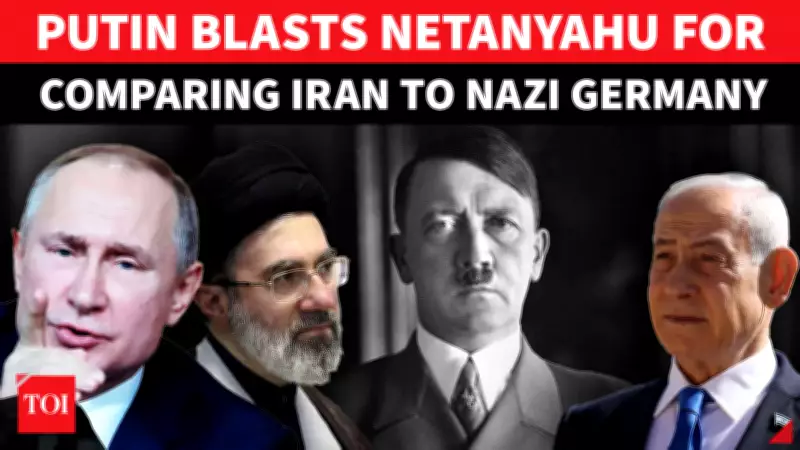
Russia Condemns Netanyahu's Iran-Nazi Comparison as Historical Distortion
In a sharp diplomatic rebuke, Russia has strongly criticized Israeli Prime Minister Benjamin Netanyahu for remarks that drew parallels between Iran and Nazi Germany. The Russian government labeled these comments as a distortion of World War II history and disrespectful to the memory of Holocaust victims, escalating an already tense geopolitical situation.
Moscow's Strong Response to Israeli Leader's Statements
The Russian response came swiftly after Netanyahu's controversial statements, which Moscow argues trivialize the atrocities committed during the Holocaust. Russian officials emphasized that such comparisons undermine historical accuracy and could potentially fuel further conflict in an already volatile region.
This diplomatic clash occurs against a backdrop of heightened tensions involving Iran, Israel, and Western powers. The war of words between Moscow and Jerusalem signals deepening divides on the international stage, where historical narratives, security concerns, and diplomatic strategies are increasingly colliding.

Geopolitical Implications of the Escalating Rhetoric
The exchange highlights several critical aspects of contemporary global politics:
- Historical Sensitivity: Russia's reaction underscores the ongoing importance of Holocaust remembrance and the political sensitivity surrounding World War II narratives.
- Middle East Tensions: The incident reflects the complex web of alliances and conflicts in the Middle East, where Iran-Israel hostilities remain a persistent flashpoint.
- Diplomatic Alignments: The confrontation reveals shifting diplomatic relationships, with Russia positioning itself as a critic of Israeli rhetoric while maintaining its own strategic interests in the region.
As the verbal conflict intensifies, observers note that such exchanges often precede or accompany more substantive policy shifts. The rapid escalation of rhetoric suggests that all parties involved are preparing for potential diplomatic or even military confrontations in the near future.
Broader Context of Regional and Global Tensions
This diplomatic spat occurs alongside numerous other developments in the Middle East, including military posturing, naval incidents, and ongoing negotiations. The region remains a tinderbox where historical grievances, religious differences, and geopolitical ambitions frequently intersect with explosive consequences.
The Russian criticism of Netanyahu's remarks serves as a reminder of how historical memory continues to shape contemporary international relations. As nations navigate complex security challenges, the language used by leaders can either bridge divides or deepen existing fractures in the global community.






