

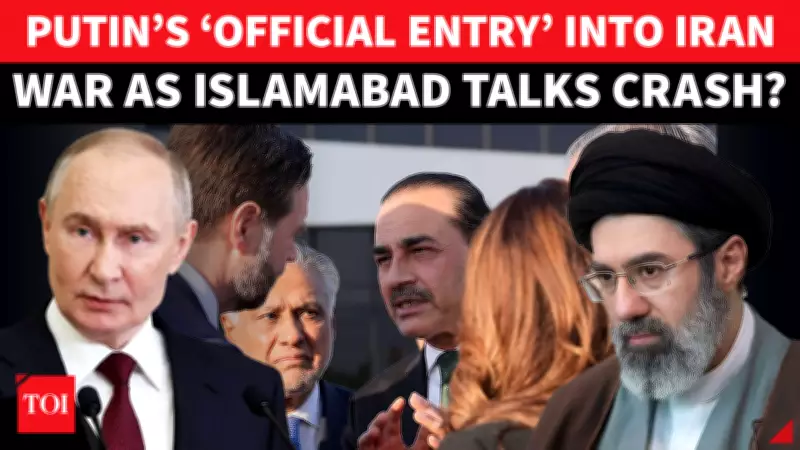
Russia Moves to Center Stage in Middle East Diplomacy After US-Iran Negotiations Fail
In a significant development that could reshape Middle Eastern geopolitics, Russia is actively positioning itself as a central diplomatic player following the complete collapse of talks between the United States and Iran. The failed negotiations, which took place in Islamabad, have created a substantial diplomatic vacuum that Moscow appears eager to fill with its own mediation efforts.
Putin's Direct Outreach to Iranian Leadership
Russian President Vladimir Putin has taken decisive action by holding a direct telephone conversation with Iranian President Masoud Pezeshkian. During this crucial exchange, Putin explicitly expressed Russia's readiness and willingness to help facilitate what the Kremlin described as a "political and diplomatic settlement" to the ongoing regional conflicts.
The timing of this Russian diplomatic initiative is particularly noteworthy, coming immediately after the Islamabad talks between Washington and Tehran concluded without any meaningful breakthrough. These negotiations, which were intended to address critical regional security issues, ended with major disputes remaining unresolved, creating an opening for alternative diplomatic approaches.

Kremlin's Commitment to Lasting Peace
According to official statements released by the Kremlin, Moscow is prepared to support comprehensive efforts aimed at achieving what it terms a "just and lasting peace" in the region. This language suggests Russia is not merely offering superficial mediation but is positioning itself for a sustained, active role in shaping future negotiation frameworks and conflict resolution mechanisms.
The diplomatic vacuum created by the failed US-Iran talks presents both challenge and opportunity. With traditional negotiation channels between Washington and Tehran proving ineffective, regional powers and international actors are reassessing their diplomatic strategies. Russia's move indicates a calculated effort to expand its influence in Middle Eastern affairs at a moment when American diplomatic leverage appears diminished.
Strategic Implications of Russia's Diplomatic Push
This development represents more than just routine diplomatic outreach. It signals a potential strategic realignment in how Middle Eastern conflicts may be managed and resolved in the coming months. Russia's willingness to step into the mediation role traditionally occupied by Western powers could fundamentally alter the diplomatic landscape.
The Russian initiative comes against a backdrop of:
- Continued regional tensions and security challenges
- Multiple unresolved disputes between Iran and Western nations
- Growing complexity in Middle Eastern geopolitical alignments
- Increasing multipolarity in international diplomacy
As diplomatic efforts continue to evolve, Russia's proactive stance suggests that Moscow sees an opportunity to enhance its regional influence while potentially marginalizing traditional Western mediation channels. The coming weeks will reveal whether this Russian diplomatic initiative gains traction or faces resistance from other regional and international actors.






