

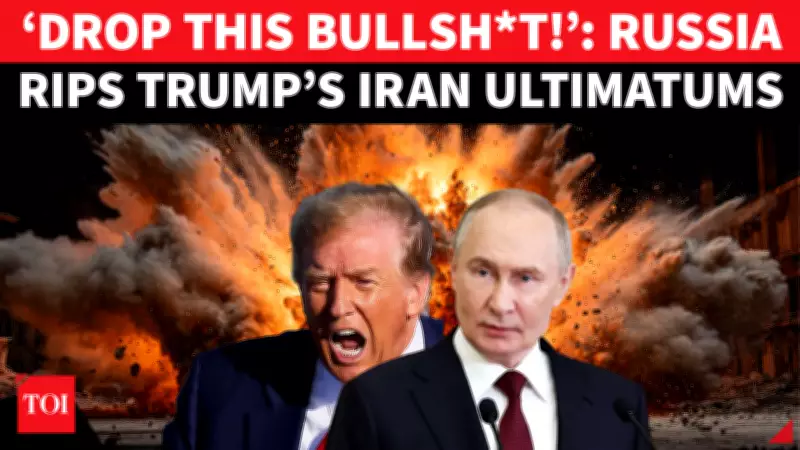
Russia Calls on United States to Abandon Ultimatums, Emphasizes Diplomacy with Iran
In a significant diplomatic move, Russia has publicly urged the United States to step back from escalating rhetoric and return to a path of constructive dialogue with Iran. The Russian government specifically called on Washington to abandon what it described as the "language of ultimatums" in its dealings with Tehran, advocating instead for a renewed focus on diplomatic solutions.
High-Level Phone Conversation Between Foreign Ministers
The appeal followed a detailed phone conversation between Russian Foreign Minister Sergey Lavrov and his Iranian counterpart, Abbas Araghchi. During this high-level discussion, both sides extensively explored various strategies to de-escalate the current tensions and promote stability in the region. The dialogue underscored a mutual commitment to resolving issues through peaceful means.
Russia's Firm Stance on Diplomatic Resolution
According to an official statement released by Russia's Foreign Ministry, Minister Lavrov emphasized that diplomatic efforts remain the most viable and effective path forward in addressing the complex situation with Iran. He articulated a clear position that sustained pressure tactics are counterproductive and that genuine progress can only be achieved through negotiation and mutual understanding.

Lavrov highlighted that the United States has a crucial opportunity to play a constructive role in this process by shifting away from confrontational approaches. He argued that a departure from ultimatums would not only benefit regional stability but also enhance international cooperation on broader security issues.
Context and Implications for Global Geopolitics
This development occurs against a backdrop of heightened geopolitical tensions involving Iran, the United States, and other regional actors. Russia's intervention signals its active engagement in Middle Eastern diplomacy and its desire to position itself as a key mediator in international conflicts. The call for diplomacy reflects a broader strategy to advocate for multilateral solutions over unilateral pressure, aligning with Russia's foreign policy objectives.
The Russian appeal underscores the ongoing complexities in US-Iran relations and the critical need for diplomatic channels to remain open and functional. It also points to the intricate balance of power in the Middle East, where multiple nations are maneuvering to influence outcomes and secure their interests.
As the situation continues to evolve, the international community will be closely monitoring how the United States responds to Russia's urging and whether this leads to a tangible shift towards more diplomatic engagements with Iran. The outcome could have significant ramifications for regional peace and global diplomatic norms.






