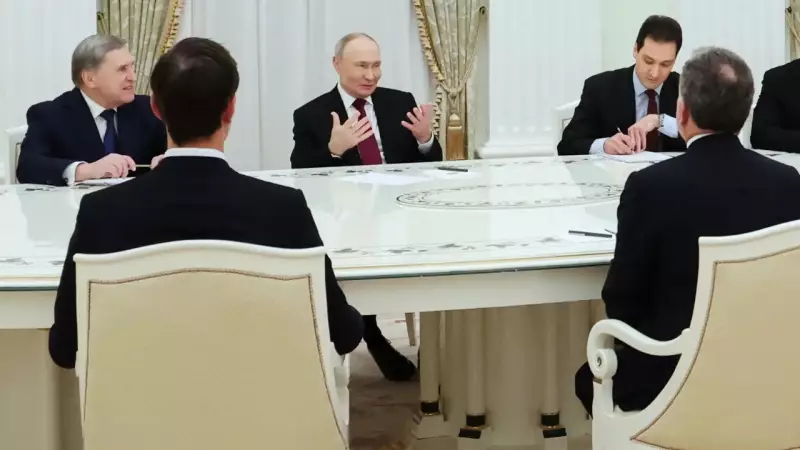
A high-stakes diplomatic effort to find a path to end the war in Ukraine has made no immediate progress, according to the Kremlin. This follows an extensive five-hour meeting between Russian President Vladimir Putin and two special envoys dispatched by former US President Donald Trump.
Marathon Talks Yield Discussion, Not Deals
The talks, held late on Tuesday, involved Trump's special envoy Steve Witkoff and his son-in-law, Jared Kushner. Kremlin aide Yuri Ushakov stated that while the discussion was "very useful, constructive and very substantive," it did not result in any compromises. The sides also failed to agree on arranging a new summit between Putin and Trump himself.
During the lengthy session, President Putin reviewed a set of US proposals that had been sent to Moscow ahead of time across four separate documents. "We could agree on some things, and the president confirmed this to his interlocutors," Ushakov revealed. However, he added that other aspects of the plan "provoked criticism," with Putin expressing a "critical and even negative attitude toward a number of proposals."

The Sticking Point: The 'Territorial Problem'
A central and contentious topic was the so-called "territorial problem" – the Kremlin's term for its claims over the entire Donbas region. It is a critical hurdle, as Ukraine still controls approximately 5,000 square kilometres of the territory that Russia asserts belongs to it. The international community, with nearly all countries, continues to recognise Donbas as part of Ukraine.
Ushakov confirmed that Putin conveyed personal greetings and "a series of important signals" to Donald Trump, though both sides agreed to keep the specifics confidential. He summed up the outcome by stating, "But there’s still a lot of work to be done, both in Washington and in Moscow. That’s what’s been agreed upon. And contacts will continue."
Hardline Rhetoric and a Controversial US Plan
Ahead of the talks, President Putin adopted a firm stance, vowing that Russian forces would continue their advance on the battlefield. He also issued a stark warning, insisting Russia does not want war with Europe but threatening that if one started, it would conclude so quickly there would be no one left for Moscow to negotiate with. Additionally, he threatened to block Ukraine's maritime access in retaliation for drone attacks on Russian tankers in the Black Sea.
Ukraine's Foreign Minister, Andrii Sybiha, interpreted these comments as proof that Putin is not ready to end the conflict. The US peace proposal, a 28-point plan revealed last month, has itself been controversial. It faced criticism from Kyiv and several European governments for allegedly leaning too far in Moscow's favour. US officials later noted that some elements were adjusted after receiving feedback from Ukraine and European partners.
A notable aspect of Trump's plan is its call for Europe to bear the majority of the financial burden and security guarantees for a postwar Ukraine, a point drafted without initial consultation with European governments. In Washington, Trump commented on the ongoing efforts, saying, "Our people are over in Russia right now to see if we can get it settled. Not an easy situation, let me tell you. What a mess."
The meeting underscores the complex and deeply entrenched nature of the Ukraine conflict. While dialogue has been reopened through backchannels, the fundamental issues of territory and security guarantees remain vast chasms to bridge, with no swift diplomatic resolution in sight.