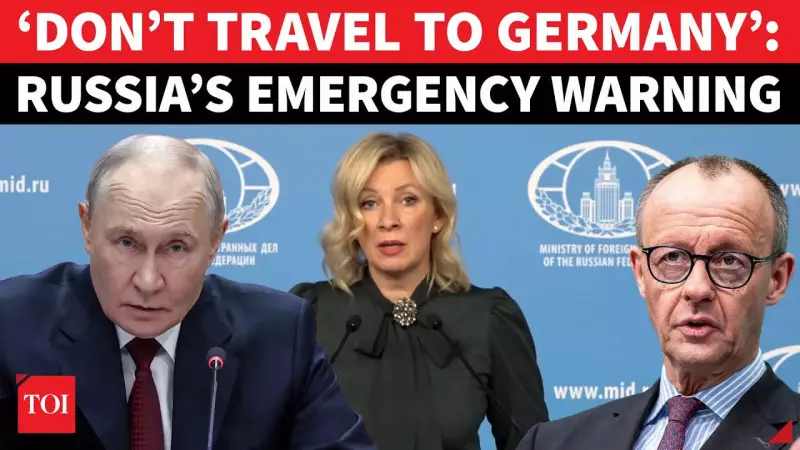
In a significant escalation of diplomatic rhetoric, Russia has officially advised its citizens to avoid traveling to Germany, labeling the NATO nation as potentially unsafe. The stark warning, issued on December 26, 2025, cites a series of alleged incidents involving the harassment and humiliating treatment of Russian nationals at German airports.
Moscow's Allegations of 'Lawless' Treatment
The Russian Foreign Ministry, through its spokesperson Maria Zakharova, has accused German authorities of engaging in a pattern of abuse against Russian travelers. Central to the allegations is the claim that German officials are confiscating personal belongings and cash from Russians, citing EU sanctions rules. Zakharova went so far as to describe Germany as a "lawless territory" for Russian citizens.
Moscow asserts that these are not isolated events but part of a disturbing trend affecting both ordinary tourists and well-known public figures. The advisory states that travel to Germany should be avoided "unless absolutely necessary," framing it as a direct response to protect Russian citizens from what it perceives as targeted mistreatment.

Diplomatic Tensions Reach a New Peak
This public travel warning injects fresh strain into the already fraught relationship between Russia and Germany, a key European Union power. The move is seen as a political counterstroke, leveraging the concerns of ordinary citizens amid broader geopolitical standoffs. As of now, German authorities have not issued a public response to the specific claims made by the Russian Foreign Ministry.
The absence of an immediate German rebuttal is notable, and it leaves the allegations hanging in the diplomatic arena. Observers suggest this warning is less about tourism and more about a calculated message to Berlin and the wider Western alliance, reflecting the deep frost in relations since the conflict in Ukraine began.
Implications and the Road Ahead
The advisory has immediate and practical consequences. For the Russian diaspora and business travelers, plans are likely to be reconsidered. More broadly, it represents a further fraying of people-to-people ties, which have long been a subtle bridge between nations even during political disagreements.
The key questions now are whether Germany will formally address the accusations and if other EU nations might face similar warnings. This development underscores how international sanctions regimes can have unintended consequences on individual travelers, becoming flashpoints in wider diplomatic wars. The situation remains fluid, with potential for further retaliatory measures from either side.