

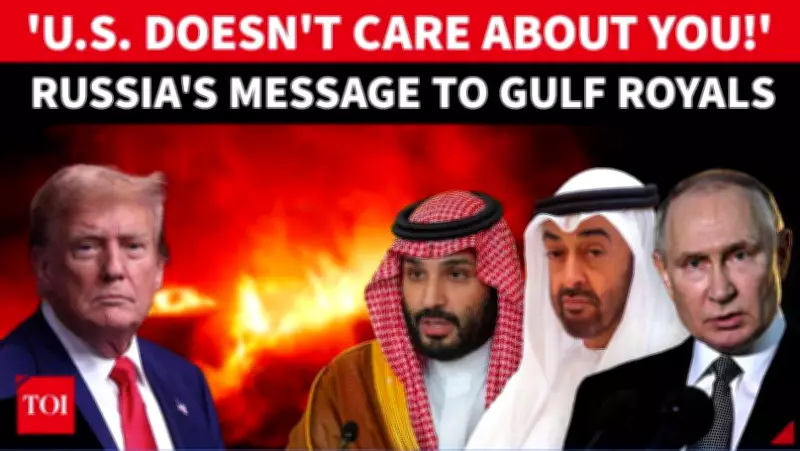
Russia Issues Blunt Warning to Gulf Nations Over U.S. Actions Against Iran
In a significant diplomatic statement delivered from China, Russian Foreign Minister Sergei Lavrov has issued a direct and forceful warning to America's Gulf allies. He cautioned that their perceived complicity in what he termed the "unprovoked aggression" of the United States towards Iran is placing the entire West Asian region in grave danger of collapse.
'You Will Suffer Too' – Lavrov's Stark Message
Lavrov's comments carried a clear and ominous message for Arab nations in the Gulf. He asserted that by aligning with or failing to oppose U.S. policies, these countries are not insulating themselves from harm. Instead, he warned, they too will face severe consequences. The Russian diplomat framed the escalating tensions as a direct result of American actions, which he described as harmful not only to Iran but also to Washington's own regional partners.
Call for U.S. to 'Be Realistic' and Halt Aggression
Central to Lavrov's address was a call for the United States to adopt a more pragmatic approach. He urged American leadership to "be realistic" and immediately cease its aggressive posture towards Iran. According to Lavrov, this continued hostility is counterproductive, destabilizing the region and undermining the security interests of all nations involved, including U.S. allies.

The warning comes amid a highly volatile period in West Asian geopolitics. Recent reports have detailed a series of provocative actions, including Iran's potential use of a Chinese spy satellite to monitor U.S. bases and retaliatory threats to blockade the critical Strait of Hormuz. These developments have sent oil prices soaring and increased fears of a broader military conflict.
Regional Implications and Broader Context
Lavrov's statement underscores Russia's positioning as a key diplomatic player seeking to counter U.S. influence in West Asia. By delivering this warning from China, the message also hints at a coordinated stance between Moscow and Beijing on regional security matters. The Russian Foreign Minister's rhetoric places direct responsibility on the Trump administration's policies for the current crisis, suggesting that a change in American strategy is the only path to de-escalation.
The situation remains fluid, with multiple fronts of tension active. Parallel developments include Hezbollah's drone and missile strikes into Israel and a war of words between former U.S. President Donald Trump and Pope Leo over the ethical dimensions of the Iran conflict. Lavrov's intervention serves as a stark reminder that the fallout from U.S.-Iran hostilities is unlikely to be contained, threatening to engulf neighboring states and trigger a wider regional catastrophe.






