

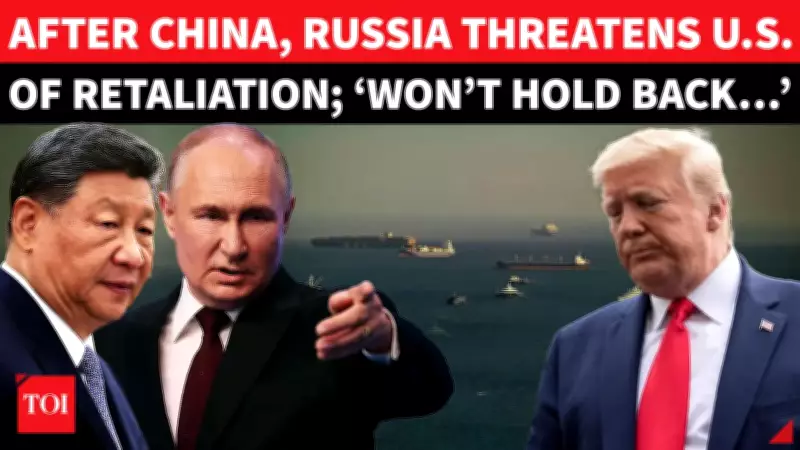
Russia Threatens 'Reciprocal Action' Over US Naval Blockade in Hormuz Strait
In a dramatic escalation of tensions, Russia has delivered a roaring reply to former US President Donald Trump, warning of 'reciprocal action' following the United States military's imposition of a broad naval blockade targeting vessels bound for or departing from Iranian ports. This aggressive maneuver, aimed at squeezing Tehran's economic lifelines and pushing it toward a diplomatic breakthrough after stalled talks, has been declared unlawful by Iranian officials and is now drawing fierce international criticism.
Details of the US Naval Blockade and Its Implications
The blockade, which involves the interception and seizure of Iranian-flagged ships near the strategically vital Strait of Hormuz, has been harshly criticized as a blatant breach of the ceasefire that was meant to halt hostilities in the region. This action has not only complicated efforts to extend the truce but has also thrust energy markets and global shipping security into the spotlight, raising alarms about potential disruptions to international trade routes.
Iranian authorities have vehemently denounced the blockade as an illegal act, arguing that it violates international maritime laws and undermines diplomatic progress. The situation has created an unpredictable and volatile environment in the Gulf, with fears mounting over possible retaliatory measures from Iran or its allies.

Russia's Stern Warning and Global Reactions
Russia's response, characterized by its foreign ministry as a call for restraint, explicitly warns that any further provocative actions by the US could trigger reciprocal measures from Moscow. This stance aligns with Russia's broader geopolitical interests in the Middle East and its support for Iran amid ongoing tensions with Western powers.
The international community is closely monitoring the situation, with many nations urging both the US and Iran to pursue diplomatic paths to avoid a full-scale conflict. The blockade has sparked debates over the legality of such military interventions and their impact on global stability, particularly in a region already fraught with historical animosities and strategic rivalries.
Broader Consequences for Ceasefire and Security
This development poses significant challenges to the fragile ceasefire that had been established to de-escalate hostilities. By engaging in what critics label as an unlawful act, the US military's actions risk derailing peace talks and could lead to a renewed cycle of violence, affecting not only regional security but also international energy supplies and maritime safety.
As tensions simmer, the world watches anxiously, hoping for a diplomatic resolution to prevent further escalation in one of the globe's most critical waterways.






