

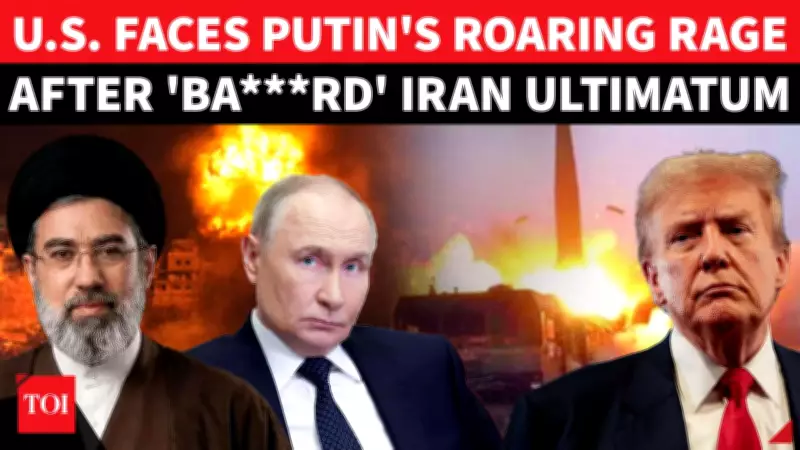
Russia Sounds Alarm Over Escalating Iran-US Conflict Following China Consultations
In a dramatic development that has sent shockwaves through international diplomatic circles, Russia has delivered a stark and chilling warning regarding the rapidly deteriorating situation between the United States and Iran. The Kremlin has explicitly stated that tensions in the Middle East, referred to as West Asia in the statement, have reached a perilous and dangerous tipping point, with the entire region effectively being "on fire."
Urgent Diplomatic Moves Amid Rising Hostilities
This grave warning from Moscow comes at a critical juncture, following a series of escalating threats and ultimatums issued by US President Donald Trump directed at Iran. The Russian statement, which was published and widely circulated by The Times of Israel, underscores the Kremlin's deep concern over the potential for the conflict to spiral completely out of control, threatening regional and possibly global stability.
The timing of this warning is particularly significant, as it was issued concurrently with urgent and high-level talks between top officials from Russia and China. Both nations are considered key allies and strategic partners of Iran, and their coordinated diplomatic huddle suggests a concerted effort to address the crisis and potentially formulate a unified response to the escalating American posture.

A Region at the Precipice
The Kremlin's characterization of West Asia as being "on fire" is not merely rhetorical. It reflects a sober assessment of a conflict zone where:
- Military confrontations and aerial engagements have reportedly increased in frequency and intensity.
- The risk of a miscalculation or a localized incident triggering a wider war is perceived to be exceptionally high.
- Diplomatic channels appear strained, with public threats replacing behind-the-scenes negotiations.
This Russian intervention serves as a direct and public challenge to the United States' current strategy, signaling that Moscow is closely monitoring the situation and is prepared to back its ally, Iran, diplomatically and perhaps in other arenas. The involvement of China adds another layer of geopolitical complexity, indicating that the Iran-US standoff is rapidly becoming a focal point for great power competition.
The Broader Context of a Volatile Standoff
The warning emerges against a backdrop of reported military actions and heightened rhetoric. While the core facts of the Russian statement center on the diplomatic warning and the China talks, the environment is one of claimed aerial dogfights, missile strikes, and special operations, contributing to an atmosphere of extreme volatility. The Kremlin's message is clear: it views the US actions as dangerously provocative and holds Washington responsible for pushing the region toward an uncontrollable blaze.
As the situation continues to develop, the international community watches anxiously. The joint diplomatic posture of Russia and China, underscored by Moscow's stark "on fire" warning, represents a significant escalation in the political dimension of the crisis, potentially setting the stage for a protracted and multi-faceted confrontation that extends far beyond the borders of Iran and the United States.






