

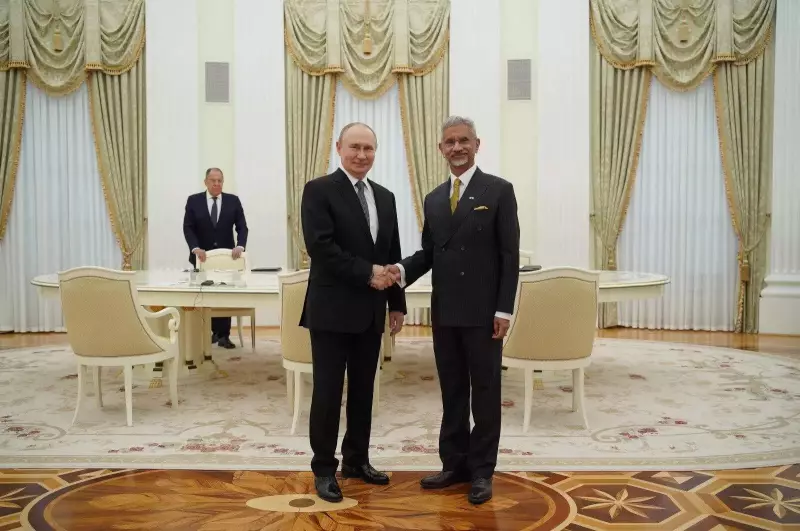
The global balance of power is undergoing a historic transformation, with India and Asia moving decisively from the periphery to the very centre of world affairs. This seismic shift has been underscored by Russia's top diplomat in New Delhi, who has declared the era of Western pre-eminence over.
Russia's Pivot East: A Strategic Choice and Necessity
Speaking in the Indian capital, Russian Ambassador to India Denis Alipov presented a stark assessment of the changing world order. He stated that the United States has ceased to be the sole superpower, while Europe's long-standing dominance is visibly fading. In contrast, he positioned Asia as the undeniable future of global politics and economic development.
Alipov emphasized that Russia's strategic reorientation towards Asia is driven by both choice and necessity. He argued that Europe's refusal to engage with Russia has paradoxically weakened its own global standing. This, in turn, has made Asia—and India as a key pillar within it—Russia's obvious and logical partner for the future.

Echoing India's Vision: The Pillars of New-Age Power
These remarks from the Russian envoy strongly resonate with the recent analyses put forth by India's External Affairs Minister, Dr. S. Jaishankar. Jaishankar has repeatedly warned that the old global order is collapsing, giving way to a new multipolar reality.
The minister has clarified that in today's world, true power flows from tangible strengths: manufacturing capability, energy security, technological innovation, and a deep pool of talent. India is aggressively advancing in all these areas through flagship initiatives like 'Make in India', positioning itself to capitalise on this global recalibration.
A Redrawn World Map: Implications and the Road Ahead
The convergence of these views from Russian and Indian leadership highlights a fundamental realignment. The geopolitical map is being redrawn, not in Western capitals, but across the dynamic economies and strategic landscapes of Asia.
This shift signifies that nations like India are no longer passive participants but are actively shaping the rules of the new international system. The focus on hard infrastructure, technology, and supply chain resilience marks a departure from the older models of influence.
As Ambassador Alipov's statement confirms, Delhi has become a crucial geopolitical hub in this transition. The deepening partnership between Russia and India, against the backdrop of a rising Asia, is set to be one of the defining features of the emerging global architecture, where historical Western centres of power must adapt to a world they no longer monopolise.






