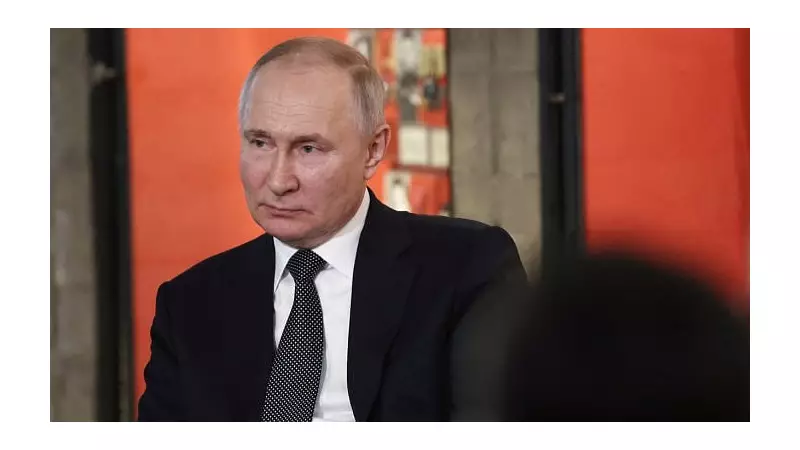
In a significant legal and diplomatic move, Russian President Vladimir Putin has signed amendments into law that empower the Russian state to disregard rulings issued by foreign criminal courts. This development comes against the backdrop of ongoing international legal pressure, most notably from the International Criminal Court (ICC) in The Hague.
Details of the New Legal Amendments
The newly enacted legal provisions, signed by President Putin on 29 December 2025, formally grant Russian authorities the power to ignore decisions made by criminal courts outside its jurisdiction. This legislative change is seen as a direct response to the increasing number of international legal actions targeting Russian officials and citizens.
Central to this context are the arrest warrants issued by the ICC. The court has accused President Vladimir Putin and five other Russian nationals of being involved in the illegal deportation of hundreds of children from Ukraine. The warrants represent one of the most high-profile international legal challenges to Russian leadership since the conflict began.

International Repercussions and Russia's Stance
This legal amendment solidifies Russia's position of non-cooperation with the International Criminal Court and similar foreign judicial bodies. Analysts view it as a pre-emptive shield against potential enforcement actions or attempts to hold Russian officials accountable on the global stage.
The move underscores the deepening rift between Russia and Western-led international institutions. By codifying the rejection of foreign court authority, Russia is asserting a principle of legal sovereignty, challenging the reach of bodies like the ICC. The specific allegations concerning the deportation of Ukrainian children have been a particularly sensitive issue, with Kyiv and its allies condemning the actions as war crimes.
What This Means for Global Diplomacy
The law's passage effectively creates a formal legal barrier, complicating any future efforts for international legal accountability related to the Ukraine conflict. It signals that Russia will continue to operate outside the framework of certain international legal norms, relying on its own domestic legislation to justify its actions.
This development is likely to further strain diplomatic relations and could lead to calls for stronger sanctions or other forms of political pressure from Western nations. It also raises questions about the mechanisms available to the international community when a major power explicitly rejects the jurisdiction of global courts.
As of now, the Kremlin maintains its denial of the ICC's allegations, framing the new law as a necessary step to protect its sovereignty and citizens from what it describes as unjust and politically motivated foreign litigation.