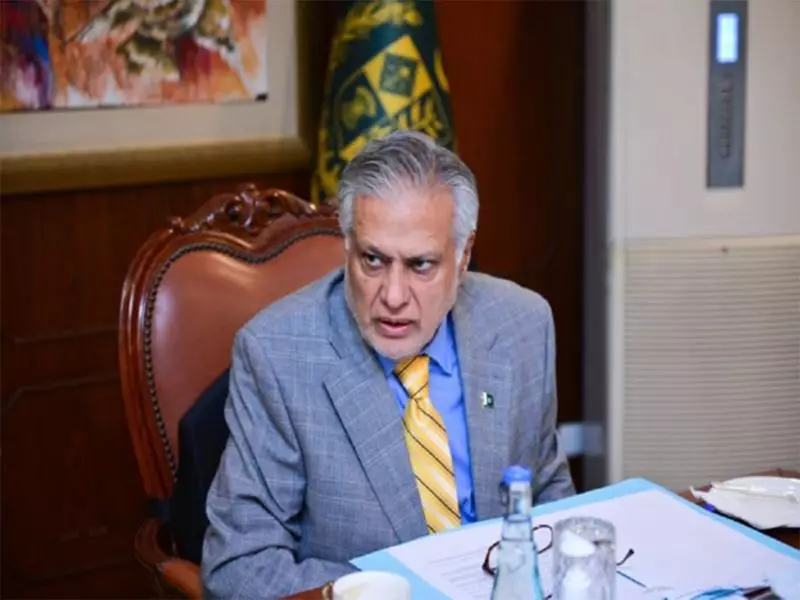
Pakistan's top diplomat has delivered a sobering assessment of recent high-level talks with Afghanistan's Taliban government, stating that the discussions hosted by Saudi Arabia failed to achieve any concrete outcomes. This admission underscores the deepening diplomatic and security impasse between the two neighboring nations.
Fruitless Dialogue in the Holy City
Foreign Minister Ishaq Dar revealed the lack of progress during a session of the Senate Standing Committee on Foreign Affairs in Islamabad. The talks took place on the sidelines of a meeting of the World Economic Forum in the Saudi capital, Riyadh, in late April. Despite the prestigious setting and the involvement of the Saudi hosts as mediators, the dialogue between Pakistani officials and the Afghan Taliban delegation did not lead to a breakthrough on any of the critical issues dividing them.
Dar explicitly stated that the negotiations "did not yield any results". This blunt acknowledgment highlights the persistent and seemingly unbridgeable gap in positions, particularly concerning Pakistan's most pressing demand: action against terrorist groups operating from Afghan soil.

The Core Issue: Terrorism and the TTP
The central point of contention remains Pakistan's demand for the Taliban-led government in Kabul to take decisive action against the Tehreek-e-Taliban Pakistan (TTP) and other militant factions. Pakistan alleges these groups use Afghan territory as a safe haven to plan and launch cross-border attacks.
Islamabad has repeatedly called on the de facto authorities in Afghanistan to prevent their land from being used for terrorism against any country, a principle included in the Doha Agreement that facilitated the Taliban's return to power. However, the Taliban government has consistently denied these allegations, creating a major stalemate in bilateral relations.
The failure of the Riyadh talks indicates that behind-the-scenes diplomacy, even with the backing of a influential Muslim nation like Saudi Arabia, has so far been unable to move the needle on this fundamental security concern for Pakistan.
Broader Implications for Regional Stability
This diplomatic deadlock has significant consequences for regional stability and Pakistan's internal security. The TTP has intensified its attacks inside Pakistan since the Taliban's takeover in Afghanistan in August 2021. Pakistan's military has been forced to launch new counter-terrorism operations along the border in response.
The lack of cooperation from Kabul complicates these efforts and fuels tensions. Furthermore, the stalled dialogue affects other areas of potential engagement, such as trade, refugee repatriation, and connectivity projects. It also places Saudi Arabia and other regional players in a difficult position as they seek to foster stability.
The outcome suggests that the Taliban government remains either unwilling or unable to sever its historical ties with the TTP, which is ideologically aligned with the Afghan Taliban. For Pakistan, the continuation of this status quo is a direct threat to its national security, likely leading to a more hardened stance and continued military pressure along the Durand Line.
As both sides dig in their heels, the path to a constructive relationship appears increasingly fraught, with the latest round of talks in Saudi Arabia serving as a clear indicator that a resolution is not on the immediate horizon.