Supreme Court Delivers Landmark Judgment on Waste Management Accountability
The Supreme Court of India has issued a landmark judgment that establishes strict accountability for violations of solid waste management rules across the country. This significant ruling came in response to an appeal filed by the Bhopal Municipal Corporation (BMC), which sought relief from a staggering Rs 1.80 crore penalty imposed by the central bench of the National Green Tribunal (NGT).
The Bhopal Waste Management Saga
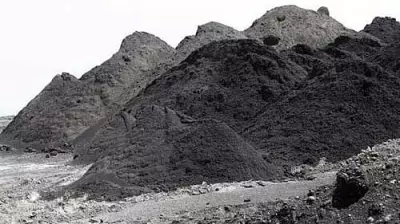
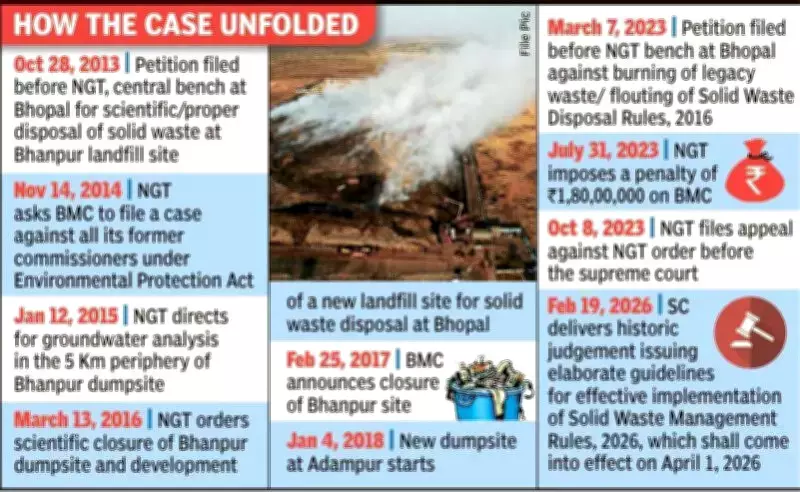
The problem of scientific waste management has plagued Bhopal for years. In 2013, heaps of legacy waste at the city's Bhanpura dumping ground and the resulting environmental pollution became the subject of a petition before the NGT's central bench. The tribunal initially ordered an FIR against nine IAS officers who had served as municipal commissioners of Bhopal, though this order was later revoked.
In 2017, authorities decided to shift the dumping ground to Adampur Chhawani. The new facility was established on 70 acres of land in 2018, while the Bhanpur site was transformed into a grassy hillock that BMC officials portrayed as evidence of Bhopal's environmental transformation.

Persistent Problems at Adampur
However, the Adampur site quickly became overwhelmed with challenges. The waste processing unit had a capacity of only 700 tonnes, while Bhopal generated approximately 850 tonnes of waste daily. This mismatch created a significant backlog of legacy waste at the new location.
Frequent fire incidents at the Adampur site raised serious concerns about air pollution and environmental safety. Residents of surrounding villages complained about:
- The unbearable stench from the waste site
- Air pollution during fire incidents
- Leachate contamination of groundwater, particularly during rainy seasons
Legal Proceedings and Penalty
Following one such fire incident in 2023, a petition was filed with the NGT, leading to the imposition of the Rs 1.8 crore penalty on BMC. Environmental activists even alleged that BMC deliberately set landfill fires to dispose of legacy waste.
When BMC appealed this decision to the Supreme Court, the apex court recognized broader systemic issues. During hearings, the court observed that poor solid waste management persists across India despite rule changes in 2002, 2016, and the upcoming 2026 regulations. The court noted that these rules have been ineffective due to inadequate execution and enforcement.
Strengthening the Solid Waste Management Rules
In its landmark judgment, the Supreme Court has added significant enforcement mechanisms to the Solid Waste Management Rules-2026, which are scheduled to take effect from April 1. The court has ordered that every person, official, and authority found contributing to, abetting, or neglecting their statutory duties regarding waste management will be liable for prosecution and fines.
This ruling establishes a precedent of strict accountability that extends beyond municipal corporations to include all responsible parties in the waste management chain. The judgment represents a significant step toward ensuring proper implementation of environmental regulations across India's urban landscape.