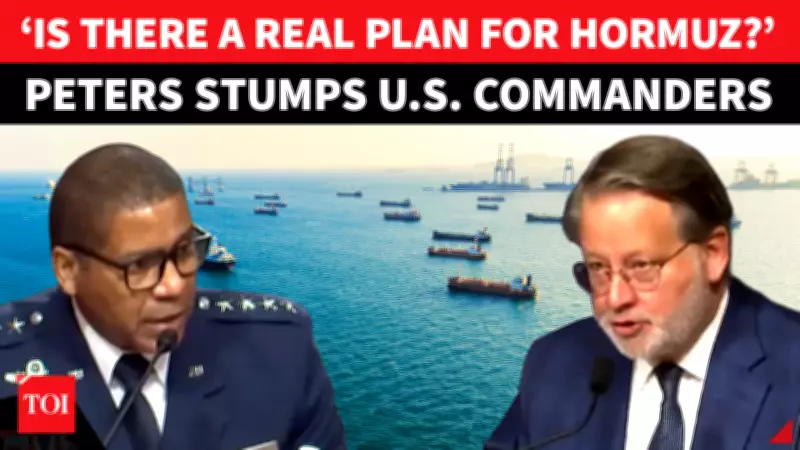
Senator Peters Raises Alarm Over US Military Strategy in Iran Conflict
Amid escalating tensions around the Strait of Hormuz, US Senator Gary Peters has issued a stark warning about the global economic consequences of the ongoing crisis. The senator highlighted that the closure of this critical shipping route has resulted in nearly 1,000 vessels being stranded in the Persian Gulf, creating a severe bottleneck for international trade.
Economic Fallout and Supply Chain Disruptions
Peters emphasized that this maritime gridlock could lead to significant disruptions in global fertilizer supplies, which in turn may cause a sharp increase in food prices worldwide. The senator pointed out that the Strait of Hormuz is a vital artery for oil and commodity shipments, and its blockage threatens to destabilize markets already strained by geopolitical conflicts.
Questioning US Military Logistics and Planning
During recent hearings, Senator Peters directly challenged US military leaders on their preparedness and logistical capabilities in sustaining operations against Iran. He raised concerns about the strain on commercial ports, fuel distribution networks, and broader supply chains, suggesting that current military actions lack a coherent long-term strategy.

"We are seeing tankers ablaze and ships trapped without a clear plan for resolution," Peters stated, criticizing what he described as an ad-hoc approach to the conflict. His remarks underscore growing unease in political circles about the sustainability of military engagements in the region.
Broader Implications for Global Security
The senator's warnings come as the Iran conflict intensifies, with reports of missile attacks and drone strikes further complicating the security landscape. Peters argued that without a strategic roadmap, the US risks exacerbating the crisis, potentially leading to wider regional instability and prolonged economic hardship.
This development highlights the intricate link between military actions and economic stability, as policymakers grapple with the fallout from one of the world's most crucial maritime chokepoints.