Sewage Crisis and Encroachment Threaten JNU's Forest Campus in Delhi
A severe environmental and health crisis has emerged at Jawaharlal Nehru University (JNU) in New Delhi, where a kilometer-long stretch of sewage water has accumulated, forming a lake-like body on the campus premises. This contamination is raising significant concerns among students, staff, and environmentalists about potential health risks and harm to wildlife that depends on the water sources within the university's forested area.
Source of the Sewage Inflow
University officials have identified the source of the problem as a damaged sewage line along the boundary with neighboring residential areas, specifically from Vasant Kunj. The sewage water is flowing into the campus and collecting along the road leading towards the vice-chancellor's residence and the Poorvanchal residential complex. Spread across more than 1,000 acres on the Southern Central Ridge of the Aravali range, nearly 30% of JNU's campus is designated as forest cover, making this contamination particularly alarming.
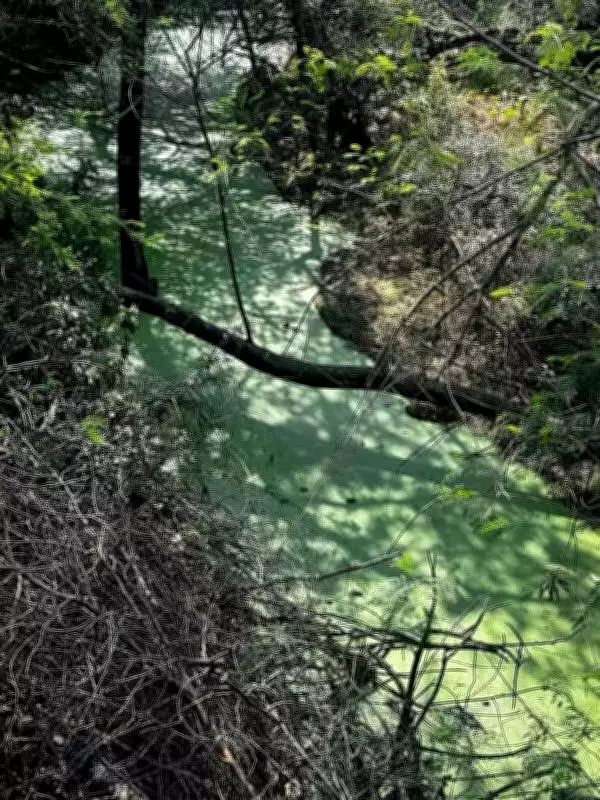
During a recent visit, it was observed that in several sections, the wastewater had stagnated into a large, murky waterbody. Dark green patches and froth were visible on the surface, emitting a strong, unpleasant smell in an area frequently used by students and residents. The accumulation has formed in a depression alongside the road that previously functioned as a rainwater catchment during the monsoon season.

Longstanding Issue and Failed Interventions
University officials revealed that this sewage inflow has been ongoing for the past five years. The wastewater was originally meant to flow into a treatment plant, but civic bodies' attempts to stop the inflow have been unsuccessful. "We have written to the civic agencies several times, most recently during the previous monsoon," an official stated, adding that the Delhi Jal Board (DJB) had promised to look into the matter. Although the flow was briefly stopped, sewage has started entering again, prompting plans for further communication with the agencies.
Residents have expressed frustration over the stagnant water, which has turned the stretch into a foul-smelling passage. Ram, a visually impaired PhD scholar, emphasized the risks: "JNU is a campus with dense greenery, and maintaining it is important to prevent any outbreak of disease that could affect both residents and wildlife. The stench not only makes it difficult to pass through the area but may also lead to water-borne diseases."
Broader Environmental and Security Concerns
A walk through the campus forest uncovered additional issues beyond the sewage crisis. A makeshift cowshed was found with several cows tied there, allegedly used by dairy workers from nearby Masudpur village for rearing cattle. Nearby, a large mound of construction and demolition waste has formed a hill-like structure, with broken concrete, bricks, and rubble scattered across patches of the forest.
The visit also revealed a damaged stretch of the boundary wall and an abandoned guard post, making it easier for outsiders to access the campus forest. Rajpal, a 60-year-old retired sanitation worker from Masudpur, noted that many people enter the forest at night from this side and engage in illegal activities, claiming the area has become a hub for drug users. Surender, who operates a taxi stand close to the cowshed, confirmed that the cattle belong to dairy owners from Masudpur, who keep them there and come during the day to milk them, asserting that his taxi stand had permission from the Delhi Development Authority (DDA).
Institutional Responses and Past Scrutiny
JNU officials stated that contractors undertaking construction works on the campus are required to transport construction and demolition waste to government-designated disposal sites outside the university. "Construction debris is not supposed to be dumped inside the campus. The matter will be examined," an official said. This issue is not new; in 2016, NGO Chetna approached the National Green Tribunal (NGT), alleging that construction debris from university works was being dumped inside the reserved forest. The NGT sought responses from JNU, and the matter has since been disposed of.

A forest department official mentioned that the Southern Central Ridge comes under the jurisdiction of the DDA, but they will send a team to inspect the non-forestry activities happening there. However, there was no response from the DDA regarding the alleged encroachment and dumping inside the ridge area. Queries sent to the Municipal Corporation of Delhi and the DJB about the damaged sewage line and steps being taken to repair it also remained unanswered.
This situation highlights a multifaceted crisis at JNU, combining environmental degradation, health hazards, and security lapses, underscoring the urgent need for coordinated action among civic bodies and university authorities to protect this vital green space in Delhi.