

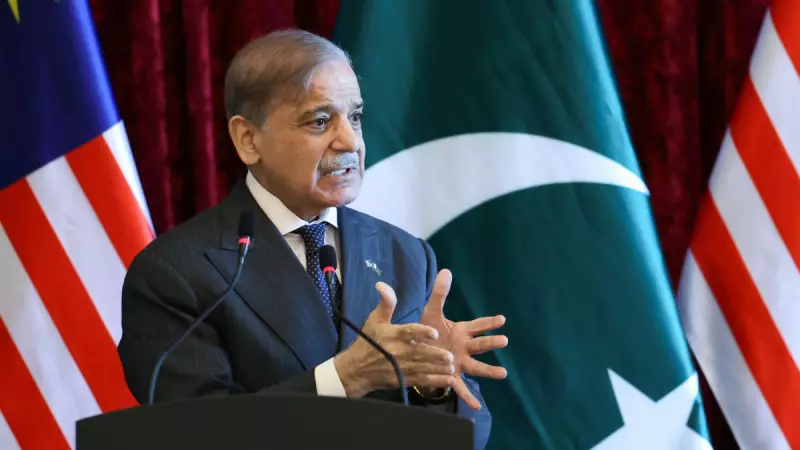
In a significant move aimed at calming the nation's fraught political atmosphere, Pakistan's Prime Minister Shehbaz Sharif has publicly extended an offer for dialogue to the opposition party of jailed former premier Imran Khan. The overture, made on Monday, December 23, 2024, is seen as a potential breakthrough to end the prolonged political deadlock that has gripped the country.
A Call for Reconciliation Amidst Deep Divisions
Prime Minister Shehbaz Sharif, addressing the media, stated his willingness to engage in talks with the Pakistan Tehreek-e-Insaf (PTI) party. This offer comes against a backdrop of intense rivalry and legal battles that have defined Pakistani politics since Khan's ouster in a no-confidence vote in April 2022. The current government, a coalition led by Sharif's Pakistan Muslim League-Nawaz (PML-N), has been at loggerheads with the PTI, which has faced a severe crackdown following the violent protests of May 9, 2023.
Sharif emphasized that the purpose of the proposed dialogue is to foster a more stable political environment. He suggested that such talks could pave the way for a smoother functioning of the National Assembly, where the PTI members have often been at odds with the ruling coalition. The prime minister's statement indicates a possible shift in strategy, from confrontation to a search for political accommodation, though he did not specify the exact terms or agenda for the proposed discussions.

The PTI's Response and Underlying Challenges
Initial reactions from the PTI camp have been cautious. Party leaders have stated they are consulting on the matter and will respond formally after internal deliberations. The core of the political tension revolves around several key issues:
- The incarceration of Imran Khan on multiple charges, which his party calls politically motivated.
- The alleged crackdown on PTI workers and leaders following the May 9 incidents.
- Disputes over the legitimacy of the current government and calls for early elections.
Analysts note that any meaningful dialogue would likely need to address these contentious points, particularly the legal cases against Khan and other PTI figures. The military establishment's role, often seen as a powerful arbiter in Pakistani politics, also looms large over any potential negotiation process. The success of this dialogue offer hinges on whether both sides are willing to make concessions and find common ground beyond mere rhetoric.
Potential Implications for Pakistan's Stability
If the dialogue materializes, it could have far-reaching consequences for Pakistan's domestic and international standing. A reduction in political infighting could allow the government to focus more acutely on the country's severe economic challenges, including negotiations with the International Monetary Fund (IMF) and tackling inflation.
Furthermore, a more stable political climate is crucial for attracting foreign investment and improving Pakistan's global image. However, skeptics argue that the deep-seated mistrust between the two major parties may be difficult to overcome. The coming days will be critical in determining whether this offer of dialogue marks the beginning of a genuine reconciliation or remains a symbolic gesture with little substance. The nation watches closely, hoping for a de-escalation that can steer Pakistan towards a path of greater political normalcy and economic recovery.






