

Sri Lanka Denies US Request to Land Armed Warplanes, Reaffirms Neutral Stance
In a firm declaration of its foreign policy, Sri Lanka has refused permission for the United States to land two of its warplanes at the country's Mattala International Airport in early March. President Anura Kumara Dissanayake announced this decision in Parliament on Friday, underscoring the nation's commitment to neutrality despite external pressures.
Details of the Rejected Requests
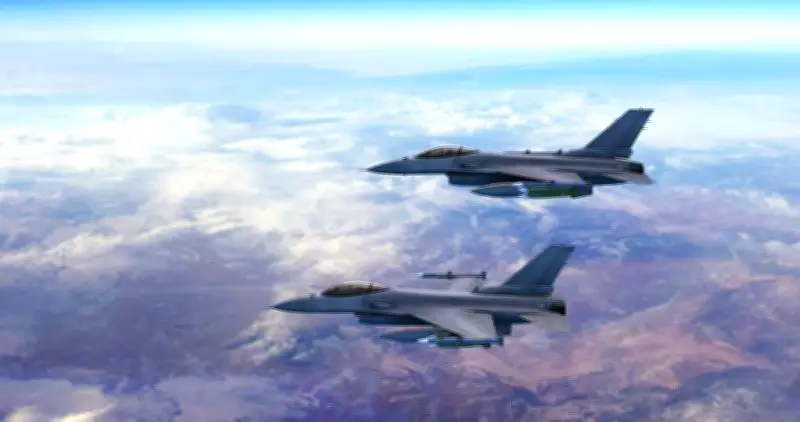
President Dissanayake revealed that the US made two separate requests on March 4 and March 8 for its warplanes to land at the airport located in southeastern Sri Lanka. Both requests were promptly rejected by the Sri Lankan government. The president specified that the aircraft were armed with eight anti-ship missiles each and were originating from a US base in Djibouti.
"We want to maintain our neutrality despite many pressures. We won't give in. The Middle East war poses challenges, but we will do everything possible to remain neutral," Dissanayake stated emphatically during his parliamentary address. This stance highlights Sri Lanka's strategic positioning in a region marked by escalating geopolitical tensions.

Context of Regional Security and Diplomacy
The president's statement came just one day after his meeting with US Special Envoy for South and Central Asia, Sergio Gor. According to official statements, their discussions focused on US efforts to safeguard vital sea lanes, secure ports, reinforce mutually beneficial trade and commercial ties, and advance a free, open, and prosperous Indo-Pacific region.
This diplomatic engagement occurs against a backdrop of heightened maritime incidents in the area. On March 4, the US torpedoed the Iranian frigate Iris Dena off Galle, a southern coastal town in Sri Lanka, resulting in the deaths of 84 sailors, with 32 others rescued. The vessel was returning to Iran from Visakhapatnam in India after participating in a naval fleet review exercise.
Two days later, a second Iranian ship, the Iris Bushehr, with 219 sailors on board, sought entry to Colombo port. Sri Lankan authorities directed the vessel to be diverted to the eastern port of Trincomalee instead. Currently, 204 of the sailors are accommodated at a Naval facility near Colombo, illustrating the complex humanitarian and security dynamics at play.
Implications for Sri Lanka's Foreign Policy
Sri Lanka's refusal to allow US warplanes to land is a significant move that reinforces its non-aligned stance in international affairs. By rejecting these requests, the country is asserting its sovereignty and independence in foreign policy decisions, particularly in the sensitive Indo-Pacific region where major powers like the US and China are vying for influence.
The decision also reflects Sri Lanka's cautious approach to avoid being drawn into regional conflicts, such as the ongoing tensions in the Middle East. President Dissanayake's remarks suggest that Sri Lanka is prioritizing stability and neutrality over potential alliances, even when faced with pressure from global superpowers.
This incident underscores the broader challenges small nations face in navigating geopolitical rivalries while maintaining their own strategic interests. As Sri Lanka continues to balance relations with various international actors, its commitment to neutrality will likely remain a cornerstone of its foreign policy in the coming years.






