

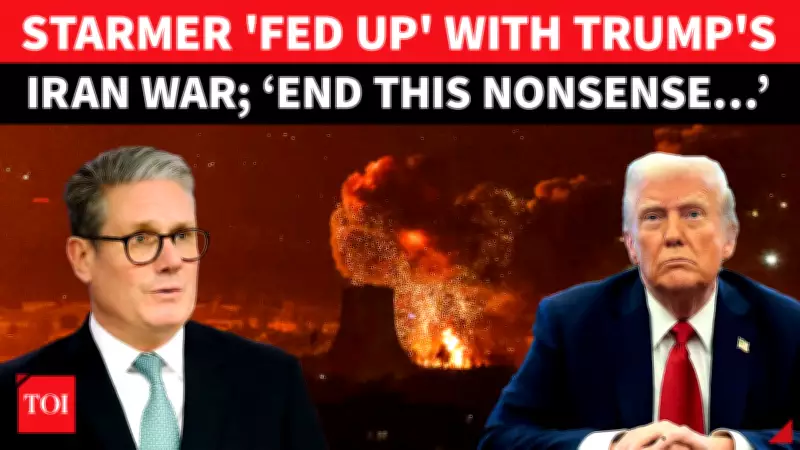
Starmer Blames Trump & Putin For Energy Chaos, Warns Fragile Ceasefire Risks Escalation
In a significant geopolitical address, UK Labour leader Keir Starmer has launched sharp criticism against former US President Donald Trump and Russian President Vladimir Putin, directly blaming their actions for creating global energy price volatility that is severely impacting British households. Speaking during a diplomatic visit to Qatar, Starmer delivered a comprehensive assessment of current international tensions and their economic consequences.
Energy Market Turmoil Linked to Political Actions
Starmer specifically identified the policies and statements of both Trump and Putin as primary contributors to the instability in global energy markets. "The reckless rhetoric and actions from certain world leaders have created perfect conditions for energy price chaos," Starmer stated, emphasizing that ordinary UK families are bearing the brunt of this volatility through increased heating and transportation costs.
The Labour leader detailed how Trump's renewed attacks on NATO allies and Putin's geopolitical maneuvers have combined to create uncertainty that markets interpret as risk, leading directly to price spikes and supply concerns that ripple through the global economy.

Fragile Middle East Ceasefire and Regional Security
Turning to Middle East tensions, Starmer characterized the current Iran ceasefire as "extremely fragile" and warned that any escalation could have catastrophic consequences. He stressed the urgent need to secure the strategic Strait of Hormuz, through which approximately one-fifth of the world's oil passes daily.
"The Strait of Hormuz represents not just a shipping lane but a potential flashpoint that could trigger broader conflict," Starmer cautioned. He also criticized recent Israeli strikes in Lebanon that occurred after the ceasefire announcement, describing them as provocative actions that undermine diplomatic efforts.
NATO Under Pressure and European Defense
Meanwhile, Donald Trump has renewed his attacks on NATO, calling alliance members "cowards" and questioning their commitment to defense spending. In response, Starmer offered a robust defense of the transatlantic alliance while simultaneously urging European nations to take on a stronger security role.
"NATO remains the cornerstone of our collective security, but Europe must step up with greater capability and coordination," Starmer asserted. He proposed enhanced European defense cooperation that would complement rather than replace NATO structures, creating what he described as "a more resilient security architecture for uncertain times."
Broader Implications for Global Stability
The Labour leader's comments come amid growing concerns that current geopolitical tensions are straining traditional alliances while simultaneously disrupting critical energy markets. Starmer warned that the combination of these factors creates a dangerous feedback loop where political instability fuels economic uncertainty, which in turn creates conditions for further political conflict.
Experts observing the situation note that Starmer's Qatar address represents one of the most comprehensive critiques of current international dynamics from a major UK political figure, blending economic analysis with security assessment in a manner that highlights the interconnected nature of modern global challenges.
As tensions continue to simmer in multiple regions, Starmer's warnings about fragile ceasefires, energy market volatility, and alliance strains underscore the complex diplomatic landscape facing world leaders in 2026, with implications that extend far beyond any single nation's borders.






